
Medial Branch Blocks & Radiofrequency Ablation
Medial branch blocks and radiofrequency ablation (RFA) are a two-step treatment for neck or low back pain that comes from the small facet joints of the spine. The first step finds out whether these joints are the source of your pain. The second step may give longer-lasting relief. Dr. Michael Chait performs both at our Pomona, NY office for patients across Rockland and Bergen counties.
The condition it treats: facet joint pain
Facet joints are the small paired joints at the back of each level of the spine that guide how it bends and twists. Like the knee or hip, they can wear down with age, arthritis or an old injury. When they become inflamed, they are a common cause of ongoing neck or low back pain, sometimes called spinal arthritis.
Common symptoms include:
- A deep, aching pain in the low back or neck that is worse with leaning back, twisting, or standing for a long time
- Stiffness, often worst in the morning
- Low back facet pain that spreads into the buttock or upper thigh, usually not below the knee
- Neck facet pain that spreads to the shoulders or causes headaches at the base of the skull
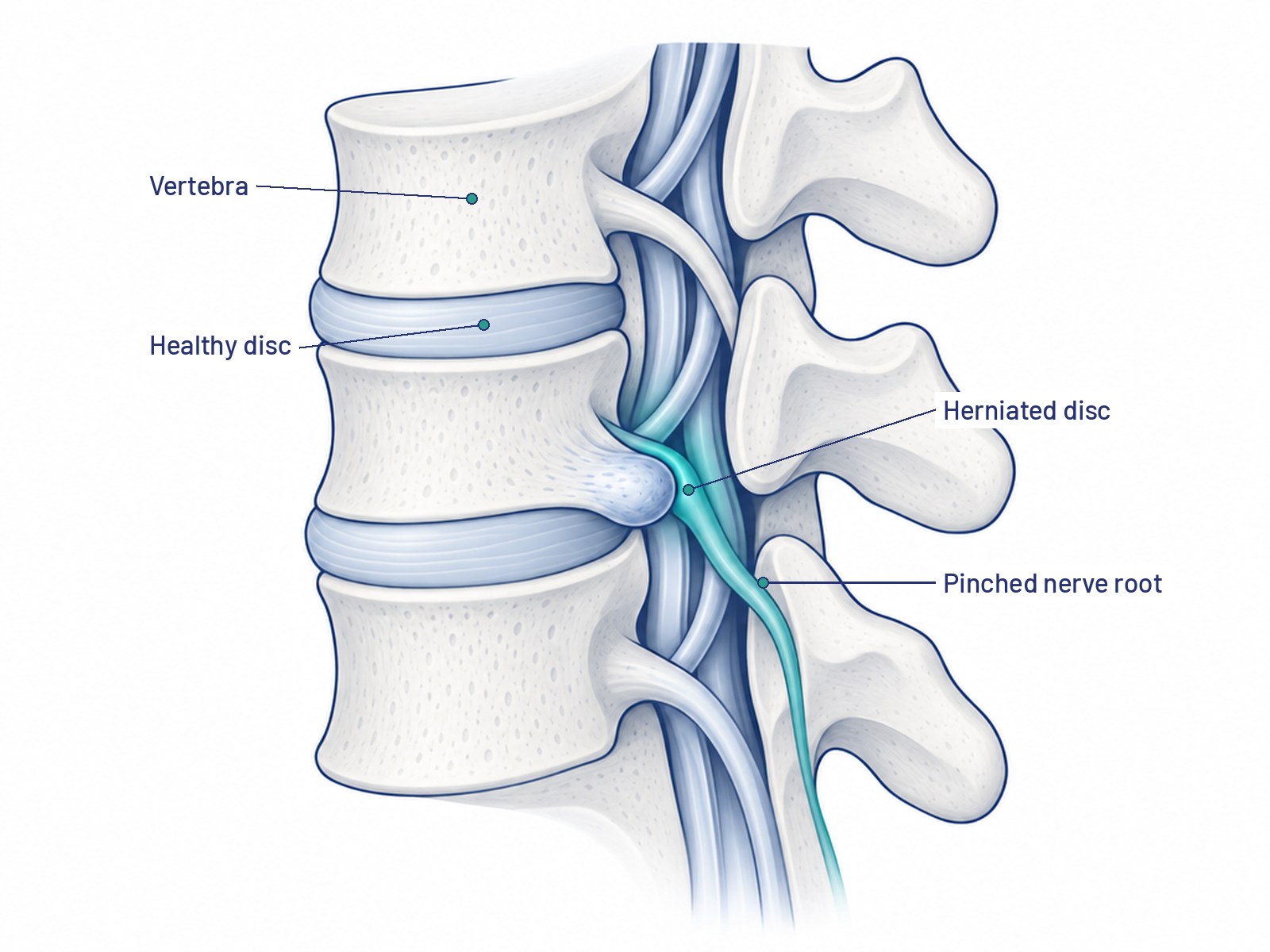
Facet pain usually does not cause the tingling, numbness or shooting pain down an arm or leg that comes from a pinched nerve. Because it is hard to confirm on an exam or MRI alone, a test injection is used.
How the two steps work
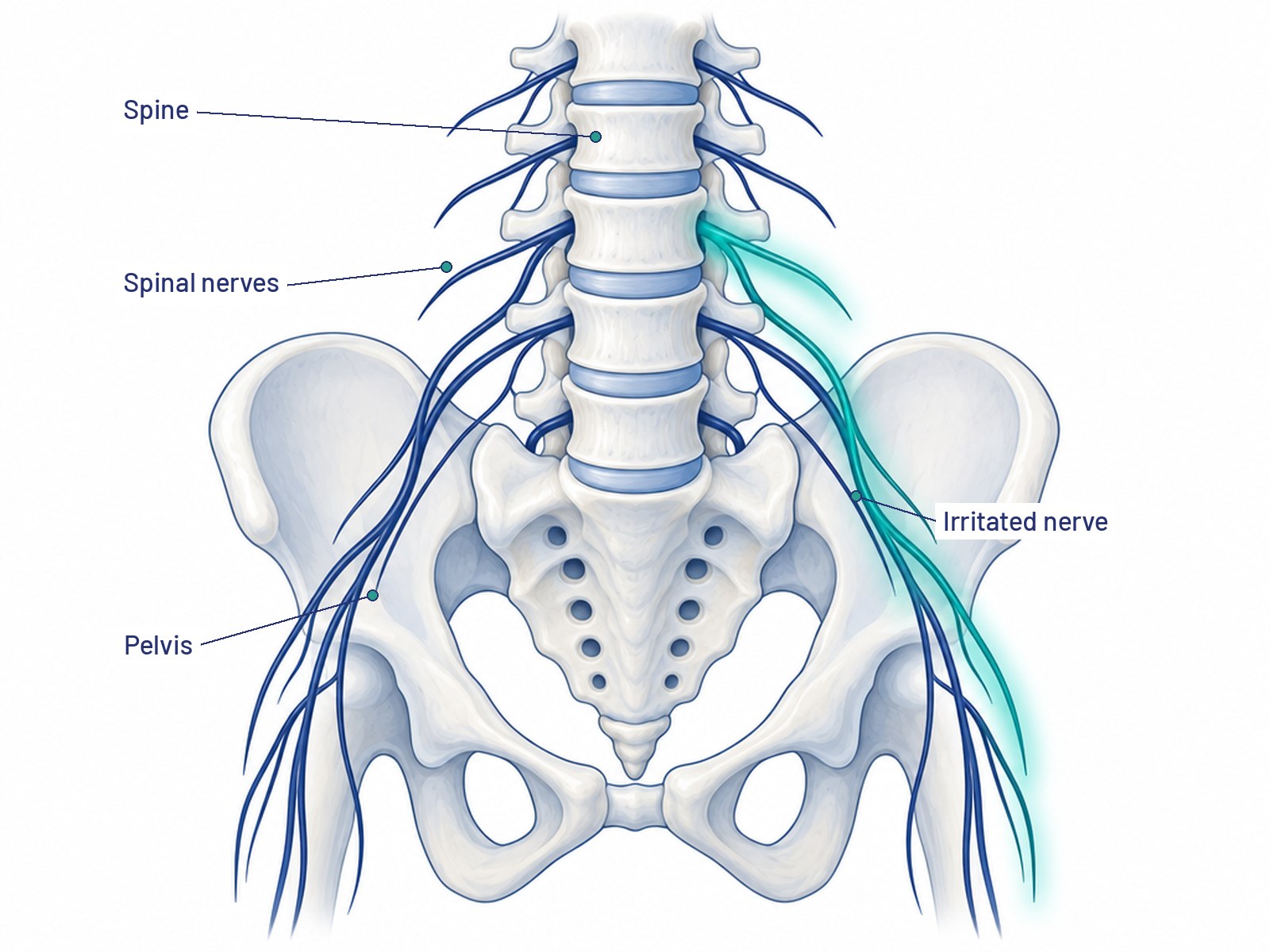
Each facet joint sends its pain signals through tiny nerves called medial branches, which carry sensation from the joint and do not control the strength of your legs or arms.
Step 1: Medial branch block. Using live X-ray guidance (fluoroscopy), Dr. Chait places a small amount of numbing medicine on the medial branch nerves of the joints he suspects. This is a test, not a long-term treatment. If your usual pain drops a great deal for the few hours the numbing medicine works, those joints are very likely the source. Many guidelines call for two separate blocks that both relieve the pain before moving to ablation.
Step 2: Radiofrequency ablation. If the blocks confirm the diagnosis, a thin, insulated probe is placed next to the same nerves. Radiofrequency energy heats the tip of the probe and creates a small lesion on the nerve so it can no longer send the pain signal. The joint itself is not changed.

Who it may help, and who it may not
This treatment may help people with:
- Neck or low back pain lasting more than a few months that has not improved with physical therapy, medicine or activity changes
- Pain that fits the pattern of facet joint pain on exam
- Clear, repeatable relief from the test blocks
It is less likely to help pain that mostly shoots down an arm or leg from a pinched nerve, and ablation is not offered when the test blocks did not relieve the pain. It may not be right for people with an active infection or certain bleeding problems; people with a pacemaker or other implanted device need special precautions, and X-rays mean it is usually postponed during pregnancy.
What to expect
Before
Dr. Chait reviews your history, exam and imaging. We will tell you which medicines to pause, such as some blood thinners, and whether to eat beforehand. Arrange for a ride home.
During
You lie face down on an X-ray table and the skin is cleaned and numbed. For a block, Dr. Chait guides thin needles to the medial branch nerves under fluoroscopy and injects the numbing medicine; this usually takes about 15 to 20 minutes. For ablation, the probe is placed the same way and tested with a tiny electrical current to confirm it sits beside the right nerve; you may feel a buzzing or a brief muscle twitch. The area is numbed and the lesion is made. Ablation usually takes about 30 to 60 minutes, depending on how many levels are treated.
After and recovery
After a block, keep a simple diary of your pain level over the next several hours; that result decides the next step. After ablation, it is common to feel sore or sunburned at the treated area for one to two weeks, and relief may take a few weeks to build. Most people return to light activity within a day or two. The nerves slowly regrow, so relief is not permanent; for many people it lasts many months to a year or more, and the procedure can be repeated.
Possible risks and side effects
Both steps are considered low-risk when done with image guidance, but no procedure is risk-free. Common, short-lived effects include soreness, bruising, a temporary increase in pain, and numbness or tingling of the skin over the treated area. Less common problems include infection, bleeding, allergic reaction, a small skin burn and nerve injury. Rarely, serious complications can occur. Dr. Chait reviews the risks that apply to you before you decide.
Part of a complete plan
At Spine & Rehabilitation Medicine Associates, interventional treatments and rehabilitation work together. Once facet pain is reduced, Dr. Samuel Rosenberg and Dr. Chait help you build the strength, flexibility and posture habits that take pressure off the joints.
Performed by Dr. Michael Chait
Medial branch blocks and radiofrequency ablation at our office are performed by Dr. Michael Chait, MD, who is board certified by the American Board of Anesthesiology and completed a fellowship in interventional pain medicine at Detroit Medical Center / Harper University Hospital.
Frequently asked questions
Why do I need the test injection first?
Facet joint pain is hard to confirm on imaging alone. A block that clearly relieves your pain shows the facet joints are the source, so ablation is only offered to people likely to benefit.
Is radiofrequency ablation surgery?
No. It is a needle-based procedure done through the skin with X-ray guidance. There are no incisions or stitches, and you go home the same day.
How long does the relief last?
It varies. The treated nerves slowly regrow, so pain can return over time. Many people get relief for many months to a year or more, and the procedure can be repeated.
Will I be awake?
Usually yes, with numbing medicine in the skin, because your feedback helps confirm the probe is in the right place. If you are anxious, tell us and we will talk through your options.
Does ablation weaken my back?
The medial branch nerves carry pain signals from the joint and supply only small muscles near the spine. Ablation is not expected to affect the strength of your legs or arms.
Ready to talk?
Call (845) 709-8555 to schedule a visit at our Pomona, NY office or to ask whether medial branch blocks and radiofrequency ablation may be right for you.




.webp)