
Botulinum Toxin Injections for Spasticity
The details
Spasticity is the stiff, tight muscle tone that can follow a stroke, a brain injury or a spinal cord injury. Botulinum toxin injections are an FDA-approved treatment that relaxes the overactive muscles so that stretching, therapy and bracing can do more. Dr. Samuel Rosenberg, DO, a physiatrist, performs these injections at our Pomona, NY office for adults from Rockland and Bergen counties, using ultrasound, EMG and/or electrical stimulation to guide each injection.
Looking for BOTOX® to prevent chronic migraine? That is a separate treatment with its own page: BOTOX® for Chronic Migraine.
How botulinum toxin works
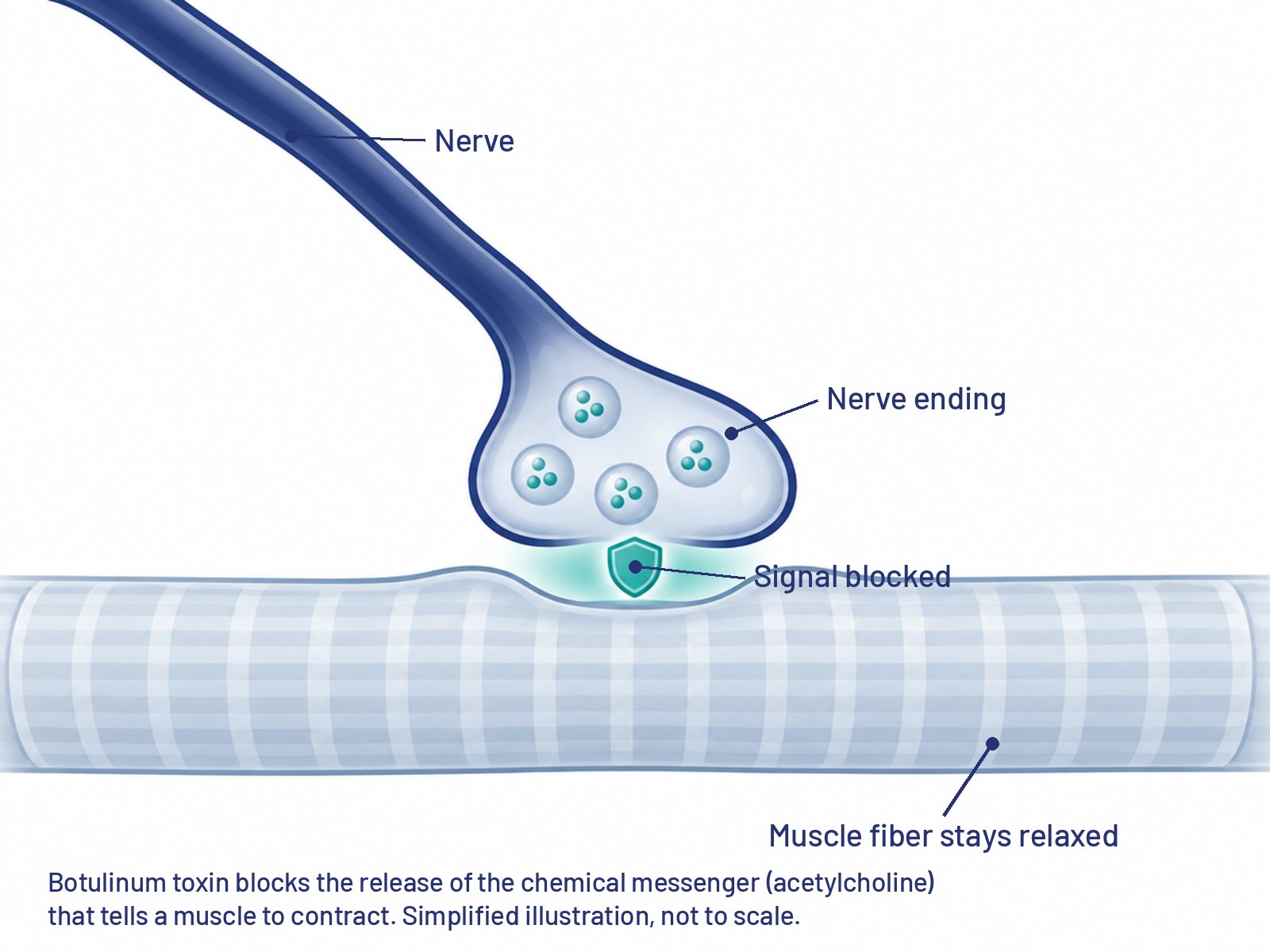
A muscle contracts when a nerve releases a chemical messenger at the spot where the nerve meets the muscle. Botulinum toxin blocks that release. When a small, carefully placed dose is injected into an overactive muscle, the muscle gets fewer “contract” signals and relaxes. The effect is local and wears off over a few months.
Spasticity after stroke, brain injury and spinal cord injury
Spasticity is muscle tightness caused by damage to the brain or spinal cord. The injured nerve pathways send too many signals to the muscles, so they stay partly “on.” A telltale sign is that the tightness depends on speed: the faster you try to move the limb, the more it resists. Spasticity is common after a stroke, a traumatic brain injury (TBI) or a spinal cord injury (SCI), and it also occurs with multiple sclerosis and other nervous system conditions.
It can affect daily life in many ways:
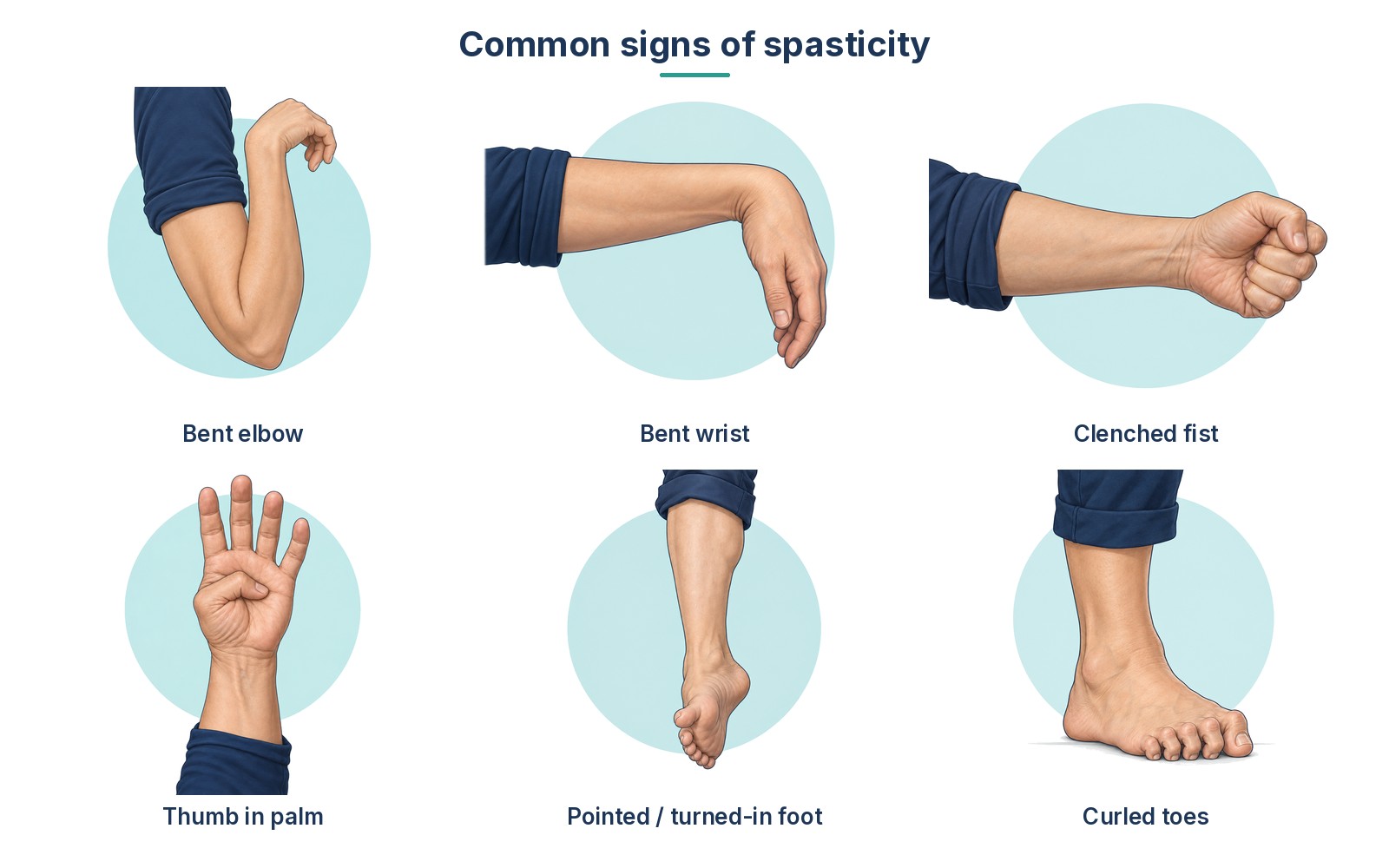
- A bent elbow, clenched fist or curled fingers that make dressing, washing the hand or trimming nails difficult
- A pointed foot or turned-in ankle that makes standing and walking harder and keeps shoes and braces from fitting
- Pain, muscle spasms and broken sleep
- Contractures, a lasting shortening of a muscle or joint that can develop when a limb is stuck in one position
- Trouble fitting splints, braces and wheelchair seating, and extra work for caregivers
Treatment goals
The injections are one part of a plan, not the whole plan. Together we set goals that might include easier hygiene and dressing, less pain, a better fit for a splint or brace, an easier routine for caregivers, or a smoother walking pattern. To make the most of the window of relief, we pair the injections with stretching, physical and occupational therapy, splinting and bracing. Dr. Rosenberg coordinates all of it in one place.
The products we use: BOTOX® and XEOMIN®
Our office uses two FDA-approved botulinum toxin type A products for spasticity. We treat adults only.
- BOTOX® (onabotulinumtoxinA) is, in the words of its FDA label, “indicated for the treatment of spasticity in patients 2 years of age and older.” The label gives dosing for both adult upper limb and adult lower limb spasticity. The label also notes a limit: BOTOX “has not been shown to improve upper extremity functional abilities, or range of motion at a joint affected by a fixed contracture.”
- XEOMIN® (incobotulinumtoxinA) is, in the words of its FDA label, “indicated for the treatment of upper limb spasticity in patients 2 years of age and older.” For adults, its approved spasticity use is the upper limb (elbow, forearm, wrist, hand and thumb muscles).
Neither label names a specific cause. The approvals cover spasticity itself, so spasticity from a stroke, TBI or SCI falls under these approved uses without any cause-specific claim.
The two products are not interchangeable. Each label states that its potency units are specific to that product and cannot be compared to or converted into units of any other botulinum toxin product. Dr. Rosenberg chooses the product and the dose for you.
Who is a good candidate
Botulinum toxin injections may be appropriate for adults with spasticity after a stroke, TBI, SCI or another nervous system condition, when tight muscles cause pain, interfere with care or function, or threaten to cause a contracture. They may be less helpful when a joint is already fixed by a contracture, and they are not a treatment for weakness on its own.
It is not right for everyone. You should not receive it if you are allergic to any botulinum toxin product or any ingredient in the formulation, or if you have an infection at the planned injection site. Tell us before treatment if you:
- Have a nerve or muscle condition such as myasthenia gravis, Lambert-Eaton syndrome or ALS, which raises the risk of serious side effects, including severe weakness and trouble swallowing or breathing
- Are pregnant, plan to become pregnant, or are breastfeeding. Based on animal data, BOTOX may cause fetal harm, and it is not known whether these products pass into breast milk
- Have received any botulinum toxin product in the last four months
- Take injected antibiotics such as aminoglycosides, muscle relaxants, anticholinergic medicines, or other drugs that affect nerve-to-muscle signaling, which can increase the toxin’s effect
What to expect
Your first visit
Dr. Rosenberg examines how your muscles move, measures tone and range of motion, reviews your goals and confirms that the treatment is appropriate. He also decides which product and which muscles fit your pattern.
The injections
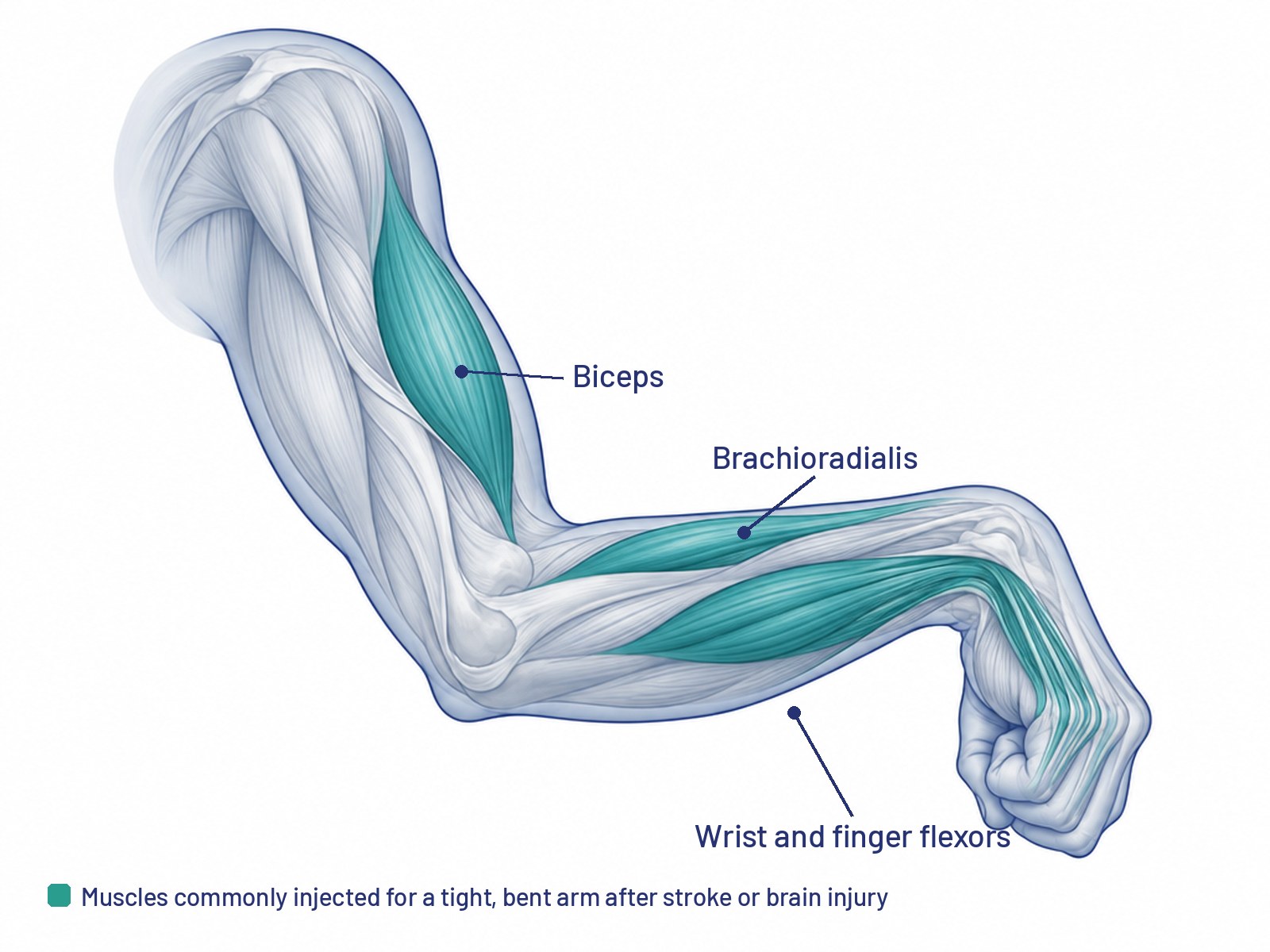
The medicine has to reach the right muscle. Both FDA labels recommend locating the muscles with needle EMG (which listens to muscle activity), electrical nerve stimulation, or ultrasound, and Dr. Rosenberg uses these tools to guide every injection. A visit involves several small injections into the target muscles. You can go home right after.
When it works and how long it lasts
Botulinum toxin does not work right away. The effect usually begins within a few days and builds over about two weeks, then gradually wears off. For most people the benefit lasts about three months. Following the FDA labels, repeat treatment is generally given no sooner than 12 weeks after the previous injection. For adults, the BOTOX label caps the total dose across all uses at 400 Units in a 3-month period, and the XEOMIN label caps the adult upper limb spasticity dose at 400 Units per treatment session.
Risks and side effects
Most side effects are mild and pass on their own. In the clinical trials described in the BOTOX label, the most common side effects for adult spasticity included pain in the treated arm or leg, muscle weakness, nausea, fatigue, bronchitis, joint pain and back pain. In the XEOMIN label’s adult upper limb spasticity trials, the most common were seizure, cold-like symptoms (nasopharyngitis), dry mouth and upper respiratory tract infection. Allergic reactions are rare but possible.
Important safety information. BOTOX and XEOMIN both carry an FDA Boxed Warning for distant spread of toxin effect. The effects of botulinum toxin may spread from the area of injection to other parts of the body, causing symptoms such as general weakness, double vision, blurred vision, drooping eyelids, hoarseness, trouble speaking, loss of bladder control, and trouble swallowing or breathing. These symptoms can appear hours to weeks after an injection. Swallowing and breathing difficulties can be life threatening. If you have any trouble swallowing, speaking or breathing after treatment, seek medical care right away. The risk is probably greatest in children treated for spasticity, but it can also occur in adults, especially those with an underlying condition that makes them more susceptible. For complete information, read the FDA-approved prescribing information and Medication Guide for BOTOX and for XEOMIN.
Insurance
Botulinum toxin for spasticity is often covered by Medicare and commercial plans for FDA-approved uses when the plan’s criteria are met, such as a documented diagnosis and treatment goals. Most plans require prior authorization. We will help check your coverage before you schedule.
Conditions we treat with this
Frequently asked questions
Is this the same as cosmetic Botox?
It is the same type of medicine, botulinum toxin type A, but the approved uses, doses and injection sites are different. For spasticity, the injections target specific overactive muscles in the arm or leg, and the dose is tailored to those muscles.
What is the difference between BOTOX and XEOMIN?
Both are botulinum toxin type A products. Their FDA-approved uses differ: for adults, BOTOX is approved for spasticity, and XEOMIN is approved for upper limb spasticity. Their units are not interchangeable, so Dr. Rosenberg chooses the product and the dose for you and does not switch between them unit for unit.
Will the injections make my arm or leg weak?
The goal is to calm specific overactive muscles, not to weaken the limb. Some temporary weakness in the treated muscles is possible and is listed in the FDA labels. Dr. Rosenberg starts at the low end of the recommended dose range and adjusts at later visits based on your response.
How do you know the medicine reaches the right muscle?
Dr. Rosenberg locates each target muscle with ultrasound, EMG (which listens to muscle activity) and/or electrical stimulation before injecting. Both FDA labels recommend these techniques for spasticity.
How often do I need treatment?
The benefit usually lasts about three months. Per the FDA labels, repeat treatment is generally given no sooner than 12 weeks after the last one. Many people continue as long as it keeps helping them reach their goals, which we review at every cycle.
Does this cure spasticity?
No. Botulinum toxin reduces muscle overactivity for a period of time and then wears off. It works best as part of a plan that includes stretching, physical and occupational therapy, splinting and bracing.
Ready to talk?
Call (845) 709-8555 to schedule a visit at our Pomona, NY office or to ask whether botulinum toxin injections for spasticity may be right for you or an adult family member. For headache treatment, see BOTOX® for Chronic Migraine.
