
Walking Difficulty, Balance Problems, and Fall Prevention
Trouble walking or a fear of falling can take away independence. Gait and balance problems have many causes, and many can be improved. As physiatrists, we specialize in helping people move safely and confidently.
Reviewed by Samuel Rosenberg, DO, FAAPMR
- Trouble walking or a fear of falling can take away independence.
- Common signs: shuffling, slow, or unsteady walking; needing to hold furniture or walls to get around; difficulty standing up from a chair; feeling dizzy or off balance.
- Treatment options: Comprehensive evaluation, physical therapy, assistive devices, treating underlying pain, home safety review, coordination of care.
- As physiatrists, we specialize in helping people move safely and confidently.
- Call 911 if trouble walking, dizziness, or loss of balance comes on suddenly, especially with numbness or weakness on one side, trouble speaking, or trouble seeing.
Understanding gait and balance problems
Walking safely depends on strength, joint health, nerve function, vision, and the inner ear’s balance system. Arthritis, back problems, neuropathy, stroke, Parkinson’s disease, muscle weakness, and some medications can all affect walking. One fall raises the risk of another, so early evaluation matters.
Common signs
- Shuffling, slow, or unsteady walking
- Needing to hold furniture or walls to get around
- Difficulty standing up from a chair
- Feeling dizzy or off balance
- Tripping or catching your toes
- A recent fall or near-fall
- Fear of falling that limits your activities
Call 911 if trouble walking, dizziness, or loss of balance comes on suddenly, especially with numbness or weakness on one side, trouble speaking, or trouble seeing.
Treatment options
- Comprehensive evaluation: Looking for each contributor, from joints and nerves to medications.
- Physical therapy: Strength, balance, and gait training tailored to you.
- Assistive devices: Choosing and fitting the right cane, walker, or brace (such as an ankle-foot orthosis for foot drop).
- Treating underlying pain: Easing knee, hip, or back pain to help you move better.
- Home safety review: Recommendations for grab bars, lighting, and removing tripping hazards.
- Coordination of care: Working with your primary care doctor, neurologist, and therapists.
What to expect at your visit
Please bring a list of your medications and any walking device you use. Your physician will ask about falls, dizziness, and daily activities. The exam includes strength, sensation, reflexes, joint motion, and a direct look at how you walk, stand, and turn. We may use standardized balance tests. You will leave with a plan aimed at improving your safety and mobility.
Home exercises
Do these next to a sturdy counter or chair you can hold. Have someone nearby if you feel unsteady.
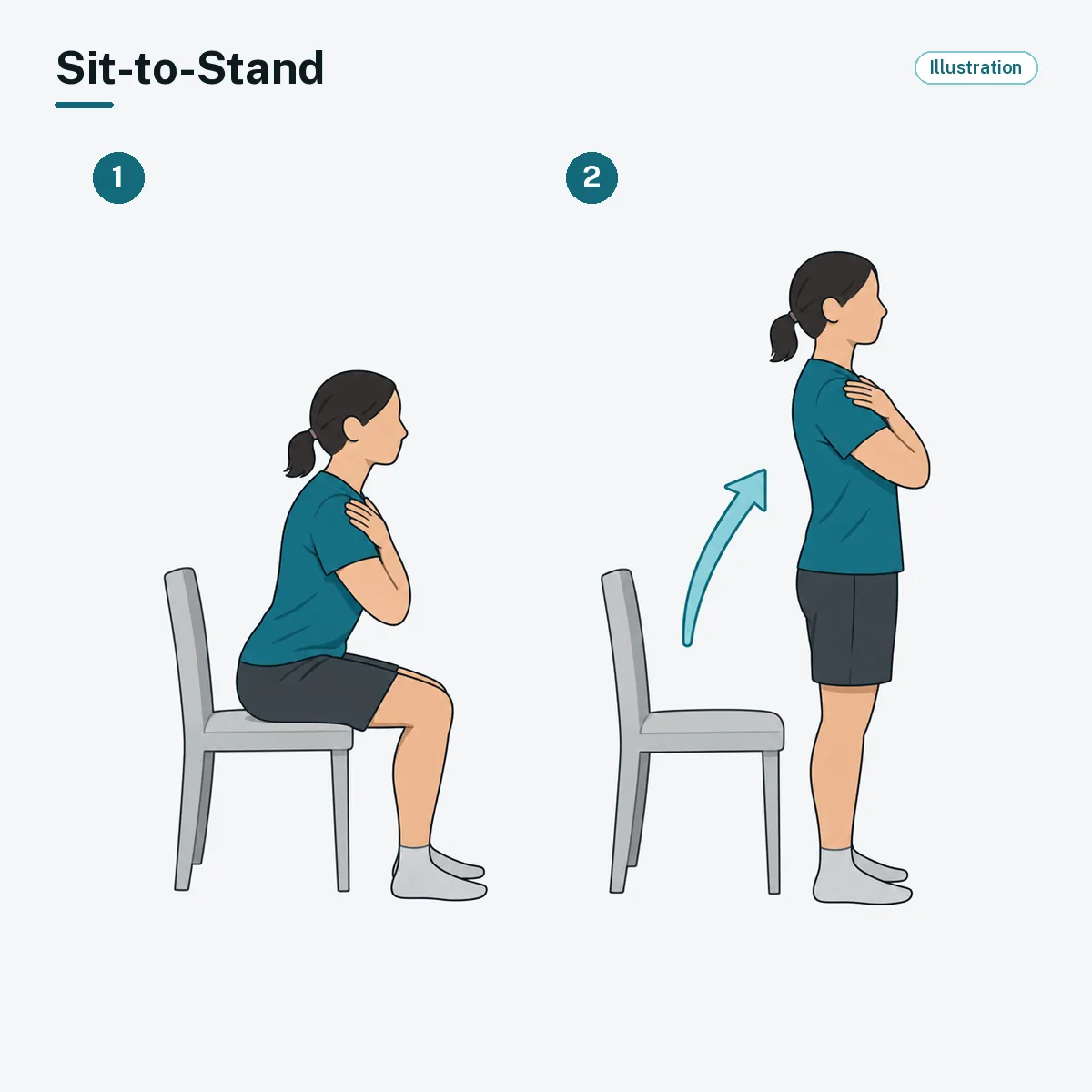 Sit-to-stand: Stand up from a sturdy chair and sit back down slowly. Repeat 10 times.
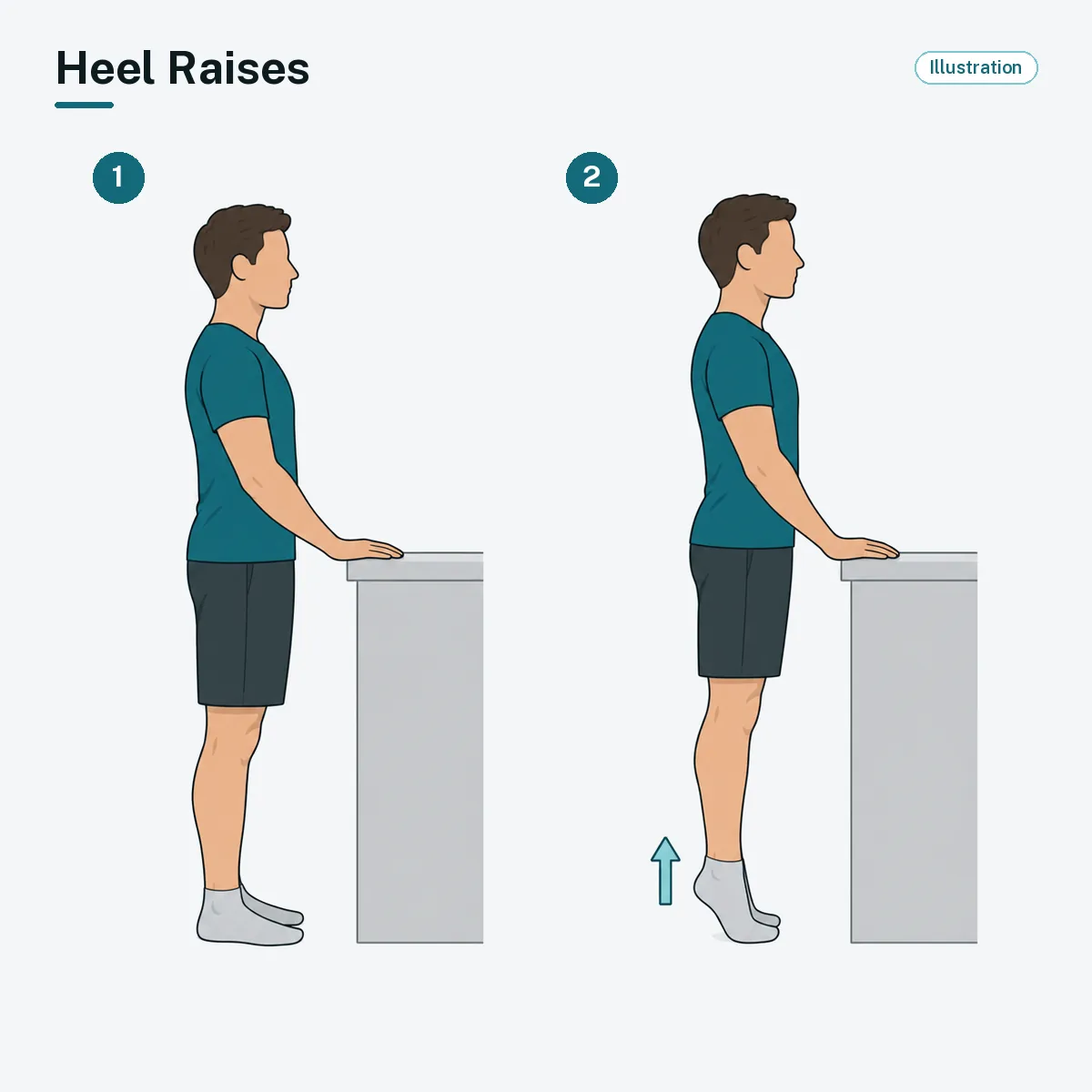 Heel raises: Holding the counter, rise up on your toes, then lower slowly. Repeat 10 times.
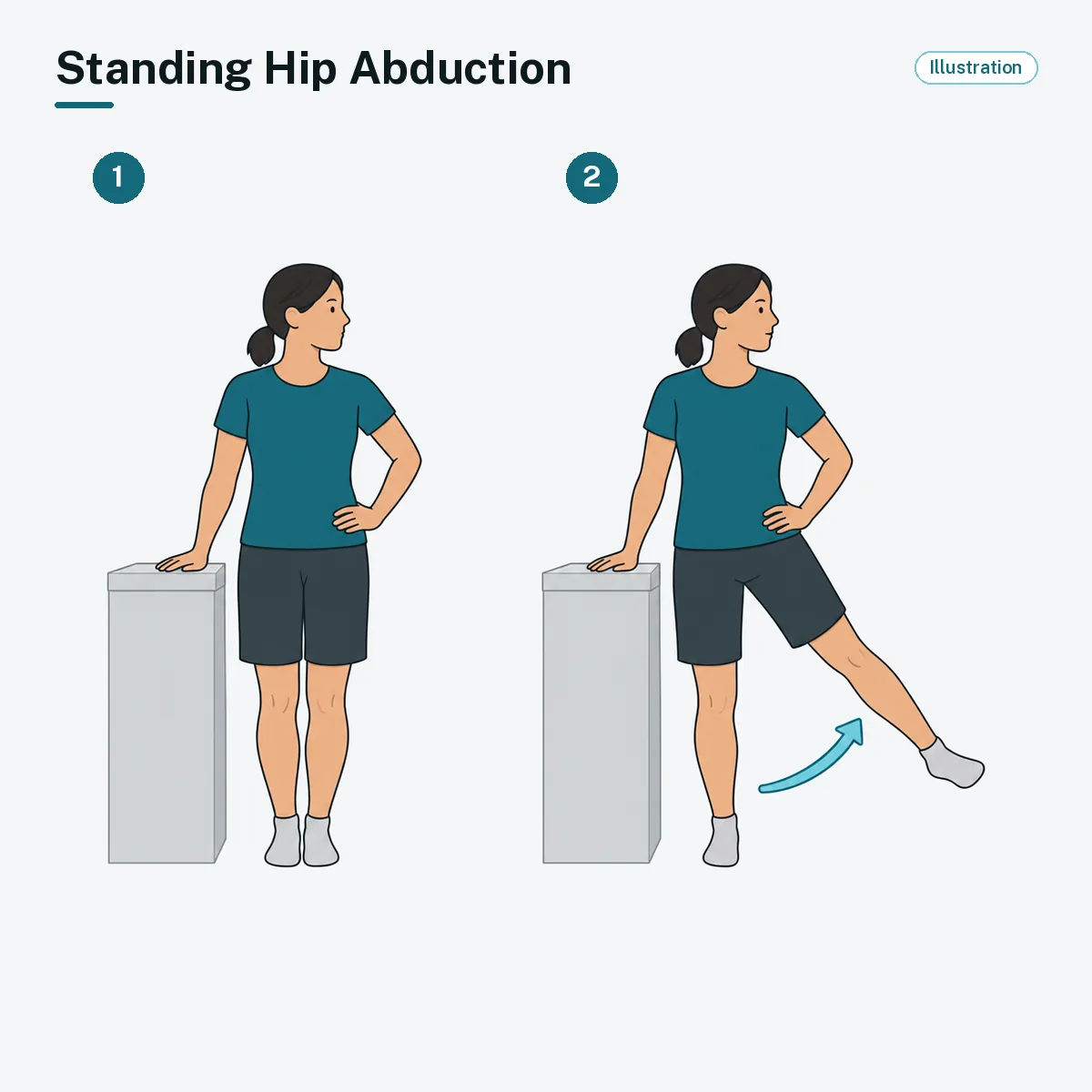 Side leg raises: Holding the counter, lift one leg out to the side. Repeat 10 times per side.
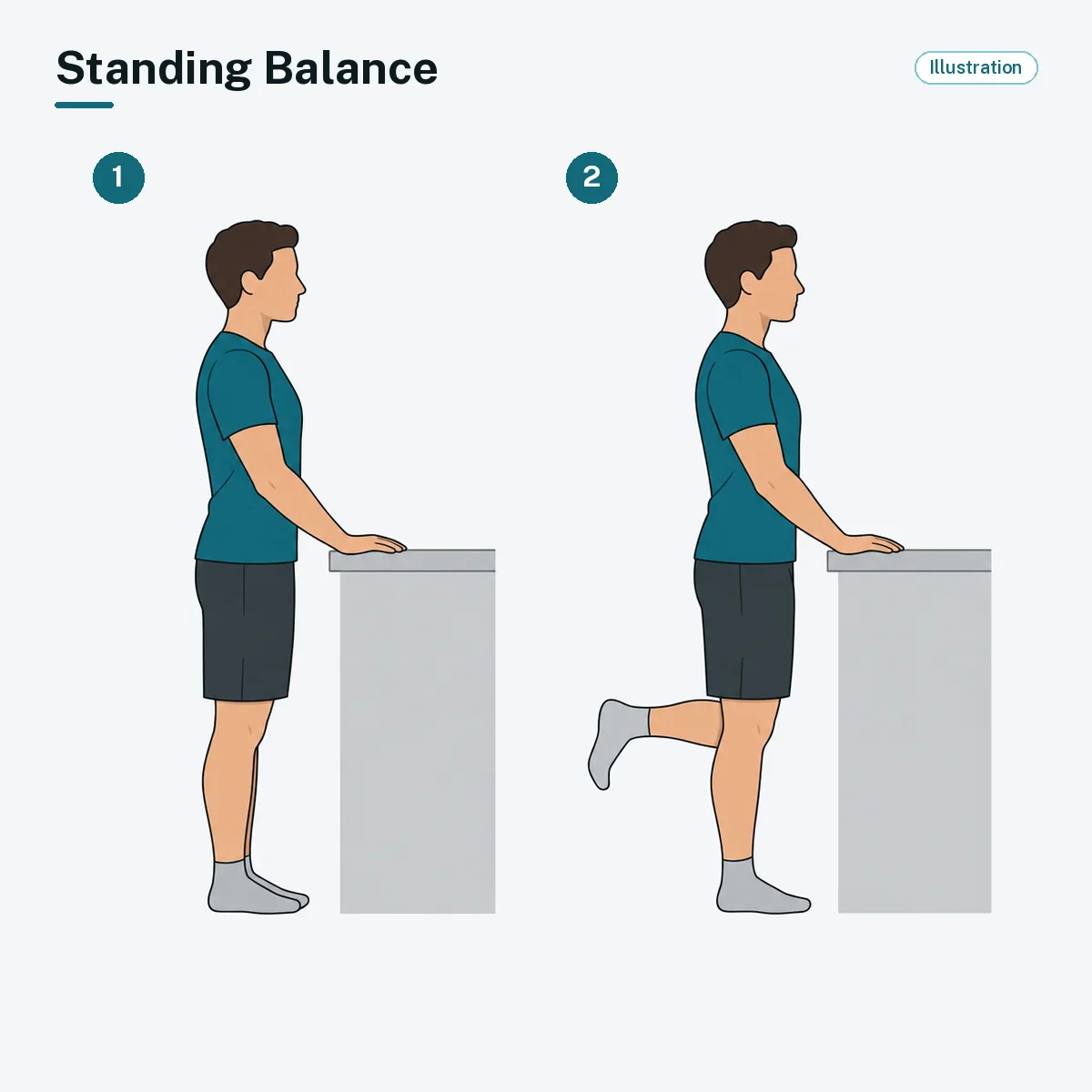 Standing balance: Hold the counter and stand with feet together for 30 seconds. Progress to one foot when ready.
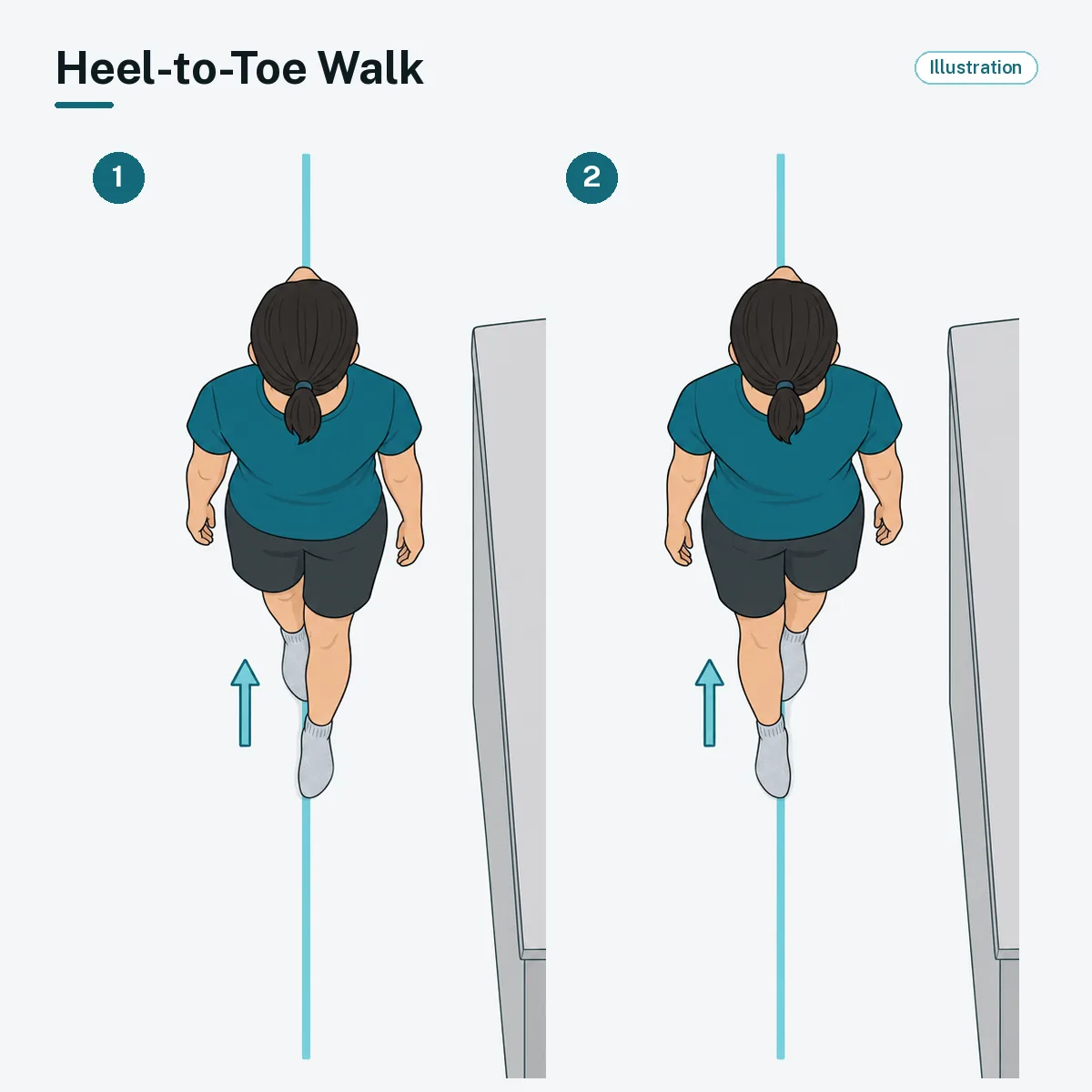 Heel-to-toe walk: Walk along the counter placing one heel directly in front of the other toe. Take 10 steps.
Frequently asked questions
When should I see a doctor about walking or balance problems?
Many people are checked for shuffling or unsteady walking, holding onto furniture or walls, trouble standing up from a chair, dizziness, tripping or catching the toes, or a recent fall or near-fall. One fall raises the risk of another, so early evaluation matters. Your physician can help identify what is contributing and what to do next.
What happens at a visit for balance problems?
The visit often starts with a comprehensive evaluation looking for each contributor, from joints and nerves to medications. The exam includes strength, sensation, reflexes, joint motion, and a direct look at how you walk, stand, and turn. Standardized balance tests may also be used, and your physician can help decide what makes sense for you.
What are the treatment options for difficulty walking?
Many gait and balance problems can be improved. Options may include physical therapy with strength, balance, and gait training tailored to you, choosing and fitting a cane, walker, or brace such as an ankle-foot orthosis for foot drop, treating underlying knee, hip, or back pain, and a home safety review. Your physician can coordinate care with your other providers.
What exercises can help my balance at home?
Home exercises may help, such as sit-to-stand from a sturdy chair, heel raises, side leg raises, standing with feet together for 30 seconds, and heel-to-toe walking. Do these next to a sturdy counter or chair you can hold, and have someone nearby if you feel unsteady. Many of these are repeated 10 times. Your physician can help decide which fit you.
Sources
- Stroke: signs and symptoms. National Institute of Neurological Disorders and Stroke (NIH).
Last updated: October 2026
