
Osteoporosis and Spinal Compression Fractures
Osteoporosis weakens bones and makes them more likely to break, often without a major fall. In the spine, it can cause compression fractures that lead to sudden back pain and a stooped posture. Early treatment can help relieve pain and may help prevent the next fracture.
Reviewed by Samuel Rosenberg, DO, FAAPMR
- Osteoporosis weakens bones and makes them more likely to break, often without a major fall.
- Common symptoms: sudden mid- or low-back pain after minor strain or a fall; pain that worsens with standing or walking and eases when lying down; loss of height; increased rounding of the upper back.
- Treatment options: Pain control, bracing, physical therapy, bone health evaluation, bone-strengthening medications, kyphoplasty referral, fall prevention.
- Early treatment can help relieve pain and may help prevent the next fracture.
Understanding osteoporosis and compression fractures
Bone is constantly broken down and rebuilt. With age, menopause, low vitamin D, certain medications such as steroids, and inactivity, bone loss can outpace bone growth. Weakened vertebrae can collapse under normal stress, such as lifting, bending, or even coughing. Many people do not know they have osteoporosis until a fracture occurs.
Common symptoms
- Sudden mid- or low-back pain after minor strain or a fall
- Pain that worsens with standing or walking and eases when lying down
- Loss of height
- Increased rounding of the upper back
- Reduced ability to bend or twist
Treatment options
- Pain control: Medications and a short period of activity modification.
- Bracing: A spinal brace may help reduce pain for some people during healing.
- Physical therapy: Safe back extension strengthening, posture training, and balance work.
- Bone health evaluation: Bone density testing and lab work for vitamin D and other causes of bone loss.
- Bone-strengthening medications: Coordinated with your primary care doctor or endocrinologist.
- Kyphoplasty referral: May be discussed for selected painful fractures that do not improve with other care. Study results for these procedures are mixed, so your physician can review the pros and cons with you.
- Fall prevention: Balance training and home safety changes.
What to expect at your visit
Your physician will ask about your pain, any falls, and your bone health history. The exam checks your spine, posture, strength, and balance. We review X-rays or order an MRI to see whether a fracture is new. We may also recommend a bone density (DEXA) scan.
Home exercises
Avoid forward bending, twisting, and lifting heavy objects. Do not start exercises until a new fracture has been evaluated.
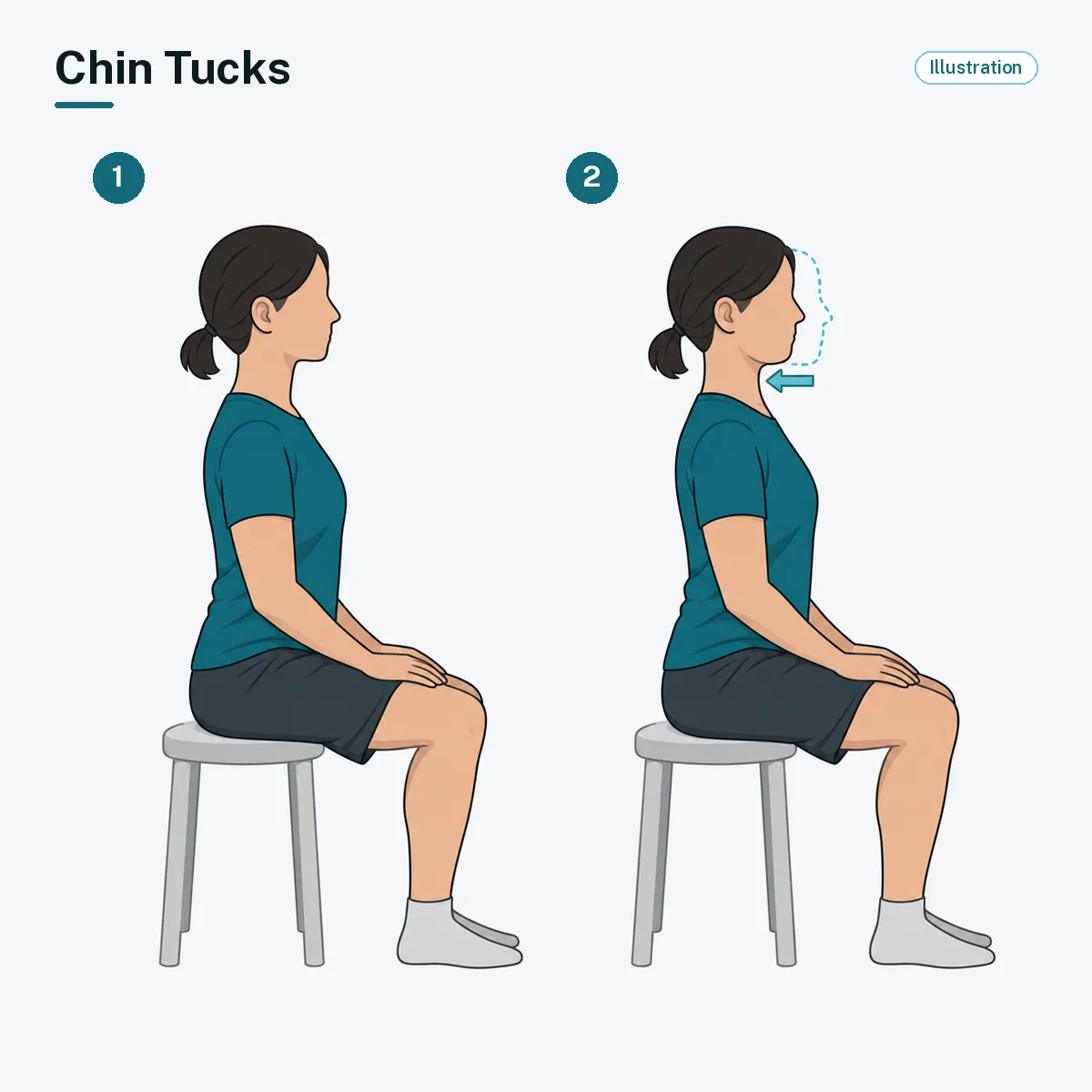 Chin tucks: Sit tall and draw your chin straight back. Hold 5 seconds. Repeat 10 times.
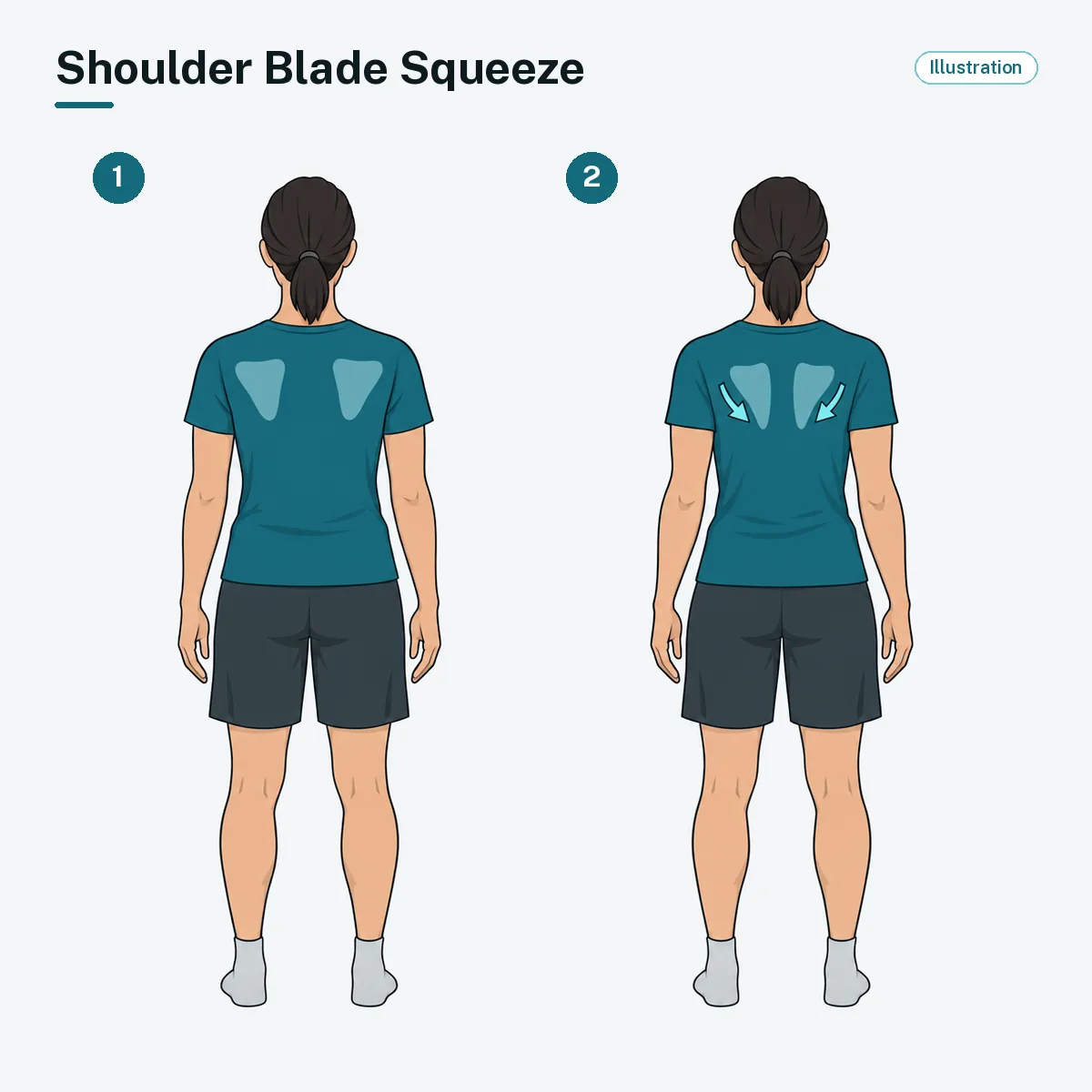 Shoulder blade squeeze: Pull your shoulder blades back and down. Hold 5 seconds. Repeat 10 times.
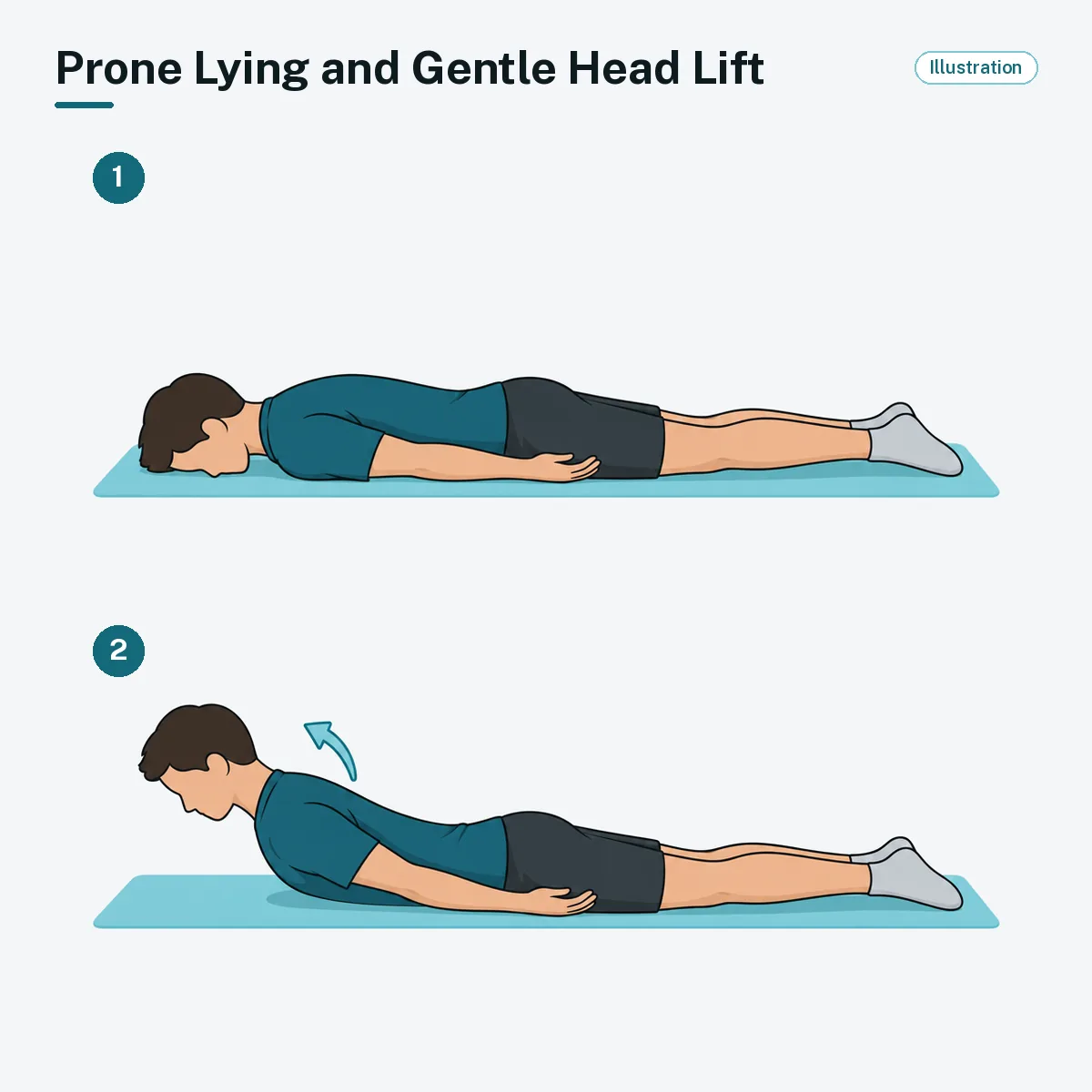 Prone lying or prone press: Lie face down for 2–3 minutes. When cleared, gently lift your head and shoulders. Repeat 5 times.
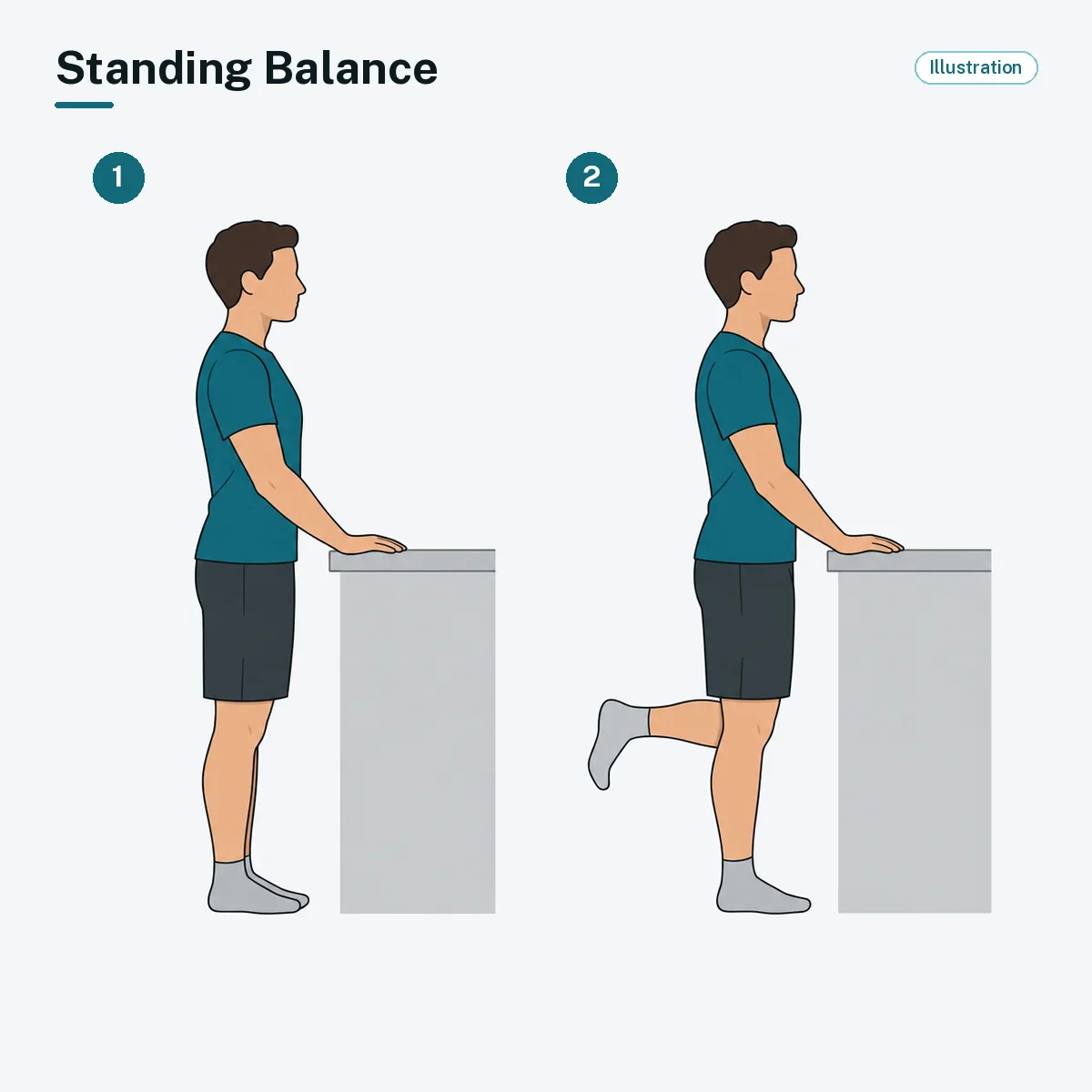 Standing balance: Hold a counter and stand with feet together for 30 seconds.
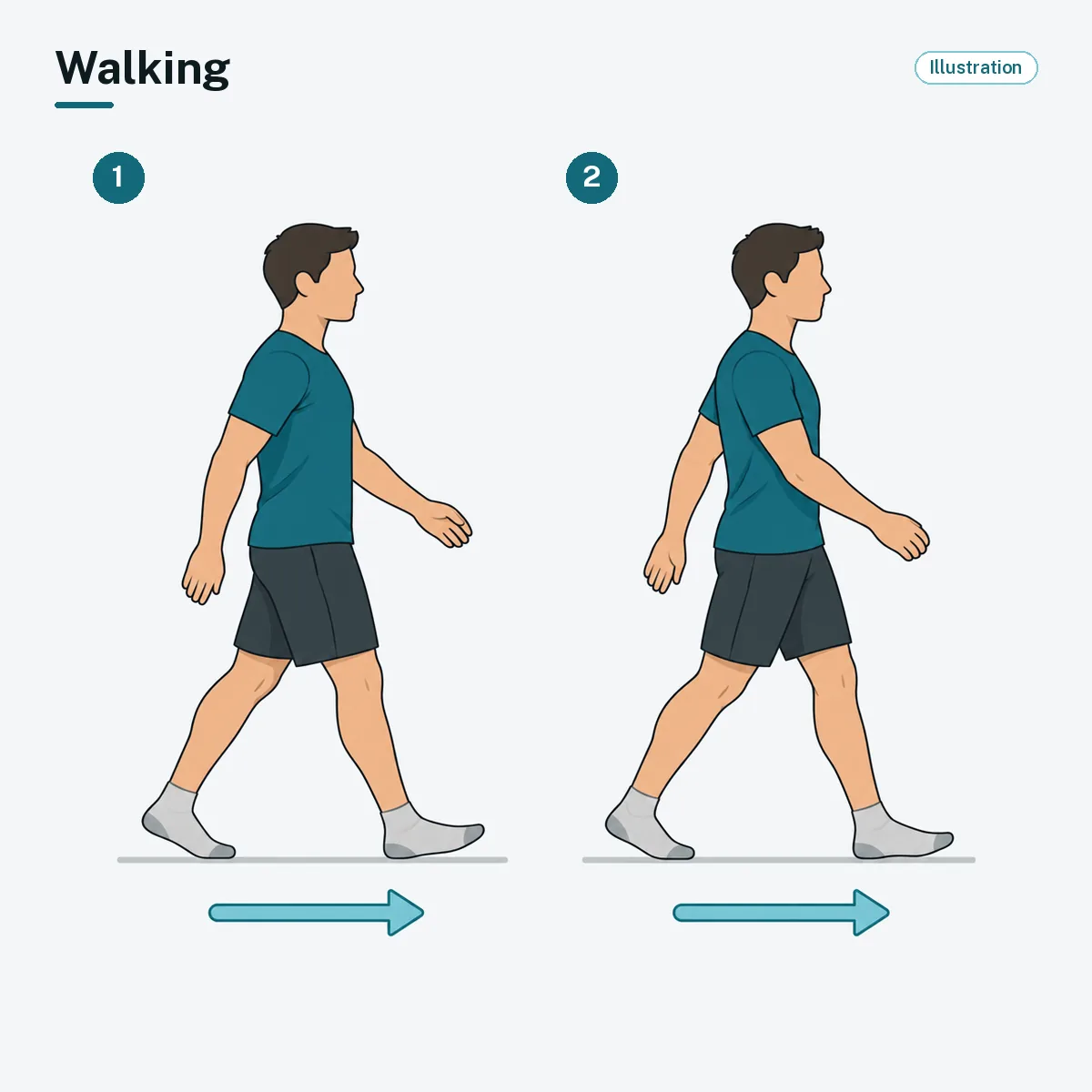 Daily walking: Weight-bearing walks of 10–30 minutes may help maintain bone strength, especially alongside the strength and balance exercises your physician or therapist recommends.
Frequently asked questions
When should I see a doctor for a spinal compression fracture?
Consider being checked if you have sudden mid- or low-back pain after a minor strain or fall, especially if it worsens with standing or walking and eases when lying down. Loss of height or increased rounding of the upper back may also be signs. Many people do not know they have osteoporosis until a fracture occurs, so talk with your physician.
Do I need an X-ray or MRI for a spinal compression fracture?
Your physician may ask about your pain, any falls, and your bone health history, and check your spine, posture, strength, and balance. X-rays may be reviewed or an MRI ordered to see whether a fracture is new. A bone density (DEXA) scan and lab work for vitamin D and other causes of bone loss may also be recommended.
How is a spinal compression fracture treated without surgery?
Care often starts with pain medications and a short period of activity modification. A spinal brace may help reduce pain for some people during healing, and physical therapy may include safe back extension strengthening, posture training, and balance work. Bone health evaluation, bone-strengthening medications coordinated with your primary care doctor or endocrinologist, and fall prevention may also be part of care. Your physician can discuss options with you.
What exercises can I do at home for a spinal compression fracture?
Do not start exercises until a new fracture has been evaluated, and avoid forward bending, twisting, and lifting heavy objects. When cleared, gentle options may include chin tucks, shoulder blade squeezes, prone lying, and standing balance at a counter. Daily weight-bearing walks of 10 to 30 minutes may help maintain bone strength, especially alongside the strength and balance exercises your physician or therapist recommends. Your physician can help decide what is safe for you.
Sources
- Percutaneous vertebroplasty for osteoporotic vertebral compression fracture. Cochrane Database of Systematic Reviews, 2018.
- The treatment of symptomatic osteoporotic spinal compression fractures (AAOS guideline). Journal of the American Academy of Orthopaedic Surgeons, 2011.
- Effect of brace to osteoporotic vertebral fracture: a meta-analysis. Journal of Korean Medical Science, 2016.
- Exercise for preventing and treating osteoporosis in postmenopausal women. Cochrane Database of Systematic Reviews, 2011.
Last updated: October 2026
