
Neck Pain (Cervical Arthritis and Spondylosis)
Neck pain affects many adults at some point. Arthritis in the cervical spine can be one cause of long-term neck pain, although these changes are also common in people without pain. Non-surgical treatment can help reduce pain, improve motion, and get you back to work, driving, and sleep.
Reviewed by Samuel Rosenberg, DO, FAAPMR
- Neck pain affects many adults at some point. Arthritis in the cervical spine can be one cause of long-term neck pain, although these changes are also common in people without pain.
- Common symptoms: aching or stiffness in the neck; pain that spreads to the shoulders or between the shoulder blades; headaches starting at the base of the skull; reduced ability to turn or tilt the head.
- Treatment options: Physical therapy, medications, ergonomic changes, cervical facet injections and medial branch blocks, radiofrequency ablation (RFA), trigger point injections, regenerative options.
- Non-surgical treatment can help reduce pain, improve motion, and get you back to work, driving, and sleep.
Understanding neck pain
The cervical spine has seven vertebrae, discs between them, and small facet joints along the back. With age and wear, discs lose height and facet joints develop arthritis, a process called cervical spondylosis. Long hours at a computer or phone, poor posture, and prior injury such as whiplash add strain. Tight neck and shoulder muscles often follow.
Common symptoms
- Aching or stiffness in the neck
- Pain that spreads to the shoulders or between the shoulder blades
- Headaches starting at the base of the skull
- Reduced ability to turn or tilt the head
- Grinding or popping with movement
- Pain that worsens after long periods looking down or at a screen
Treatment options
- Physical therapy: Posture correction, neck and upper back strengthening, and mobility work.
- Medications: Anti-inflammatories, muscle relaxants, and topical treatments.
- Ergonomic changes: Adjusting screen height, chair, and pillow.
- Cervical facet injections and medial branch blocks: Can help identify and treat pain from arthritic joints.
- Radiofrequency ablation (RFA): May provide longer-lasting relief for facet joint pain.
- Trigger point injections: For tight, painful neck and shoulder muscles.
- Regenerative options: PRP may be considered for selected patients.
Injections to support your therapy: When pain makes it hard to progress with physical therapy or home exercise, an image-guided injection may calm inflammation and reduce pain so you can participate more fully. The goal is to help your exercise program work better, not to replace it. Learn more about facet injections and medial branch blocks.
What to expect at your visit
Your physician will ask about your pain, posture, work setup, and any injury. The exam evaluates neck motion, tenderness, muscle tightness, strength, and sensation in the arms. We will review imaging and order X-rays or an MRI only if needed. You will leave with a plan aimed at easing pain and improving function.
Home exercises
Move slowly and within a comfortable range. Never force the neck.
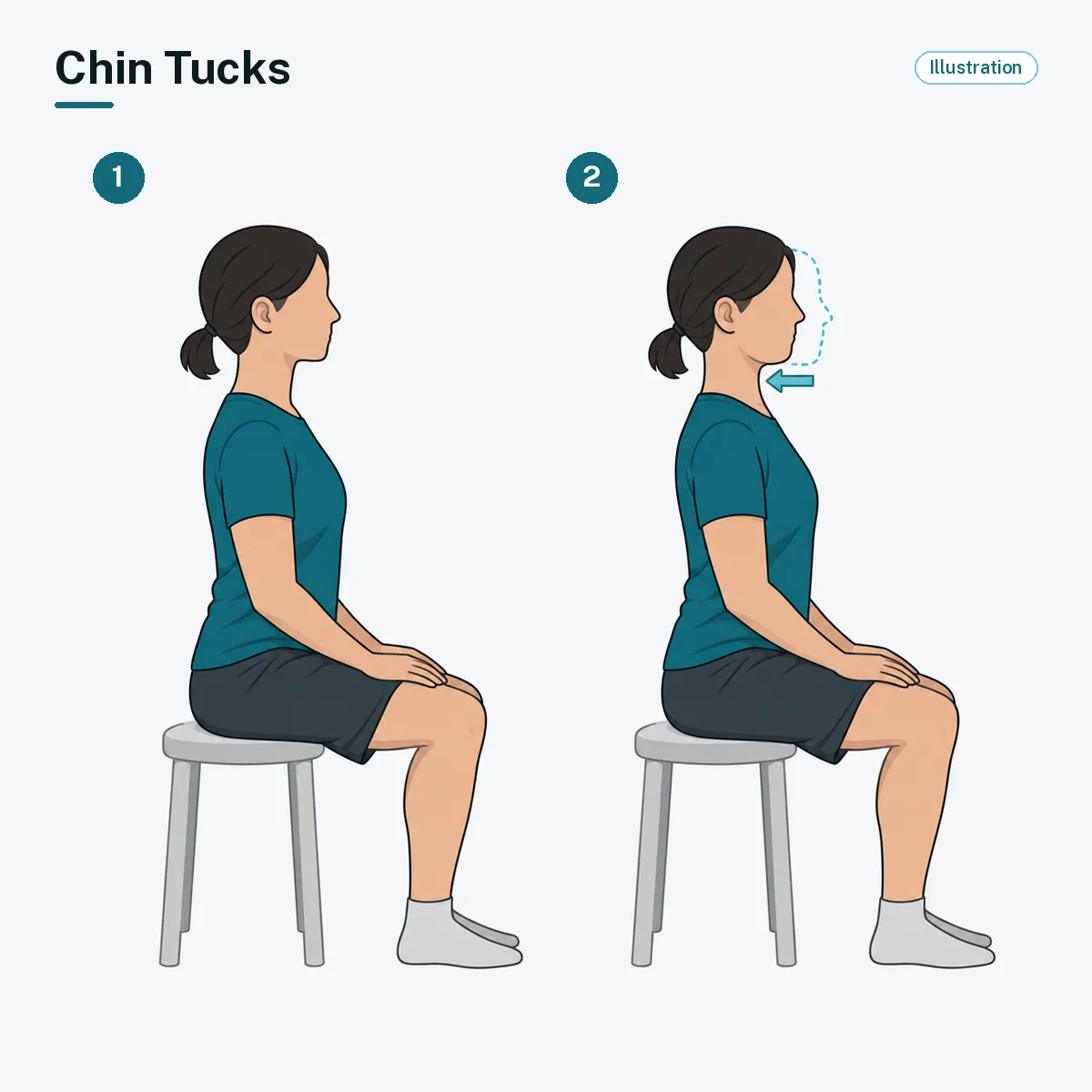 Chin tucks: Sit tall and gently draw your chin straight back, making a double chin. Hold 5 seconds. Repeat 10 times.
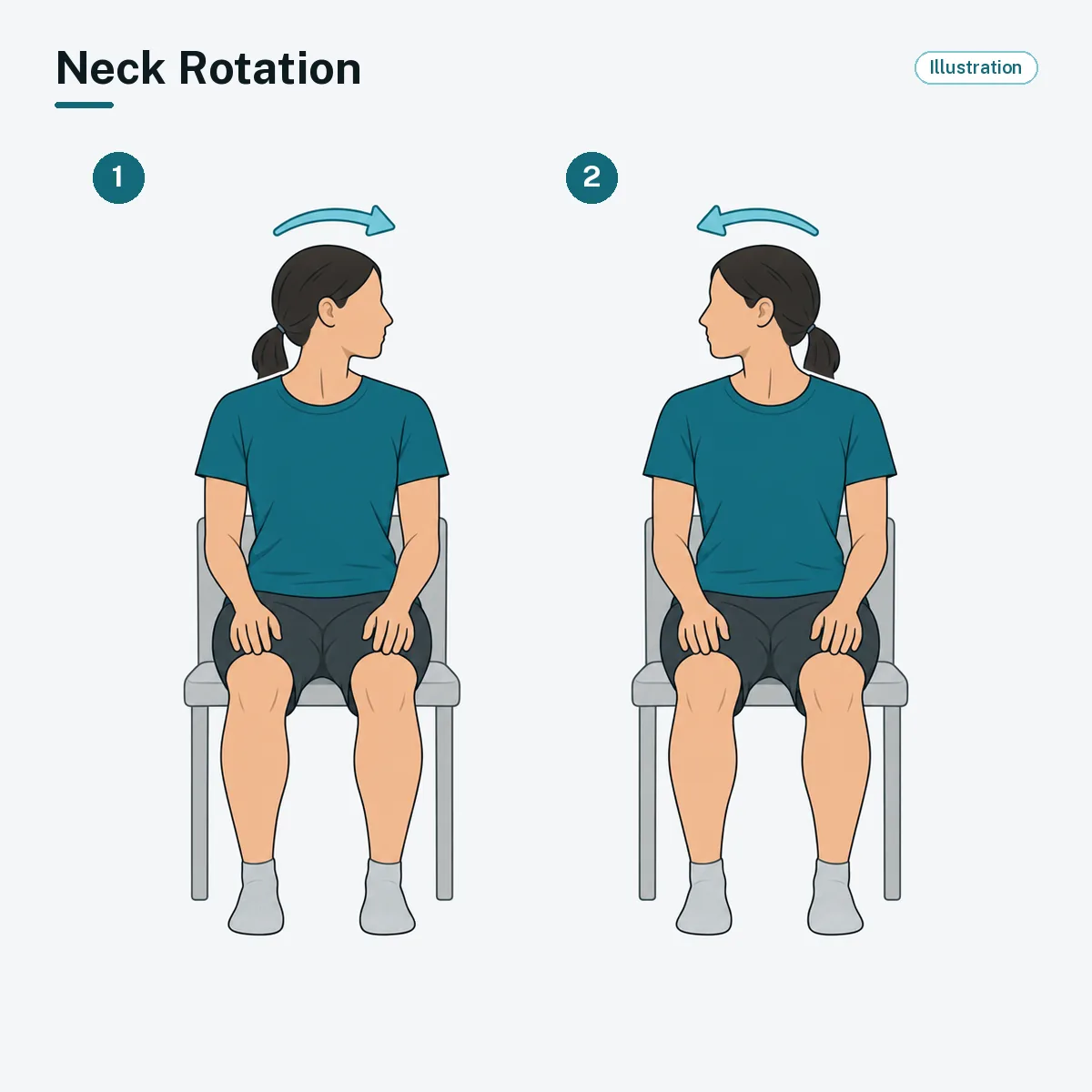 Neck rotation: Slowly turn your head to look over one shoulder, then the other. Repeat 10 times each way.
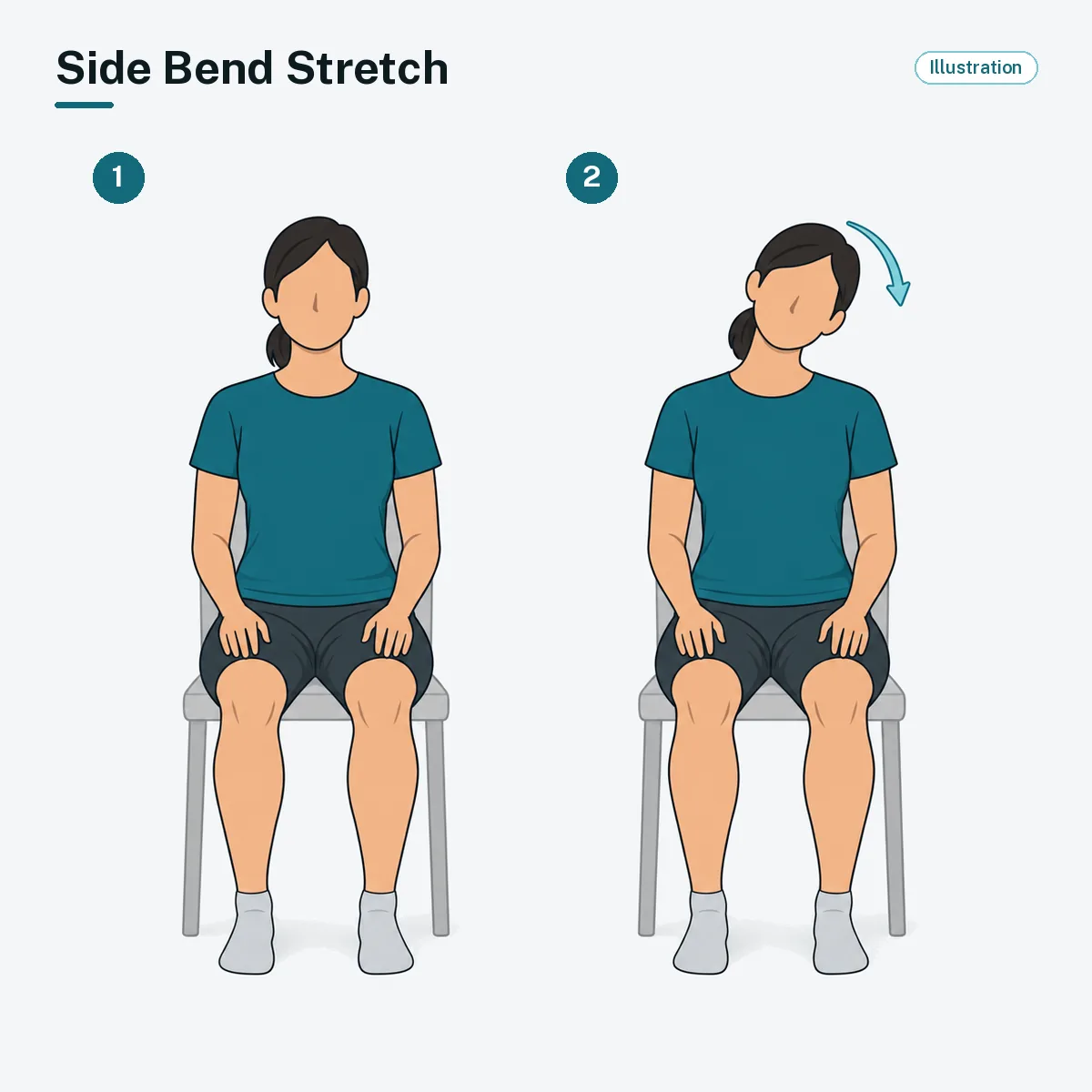 Side bend stretch: Tilt your ear toward your shoulder. Hold 20–30 seconds. Repeat 3 times per side.
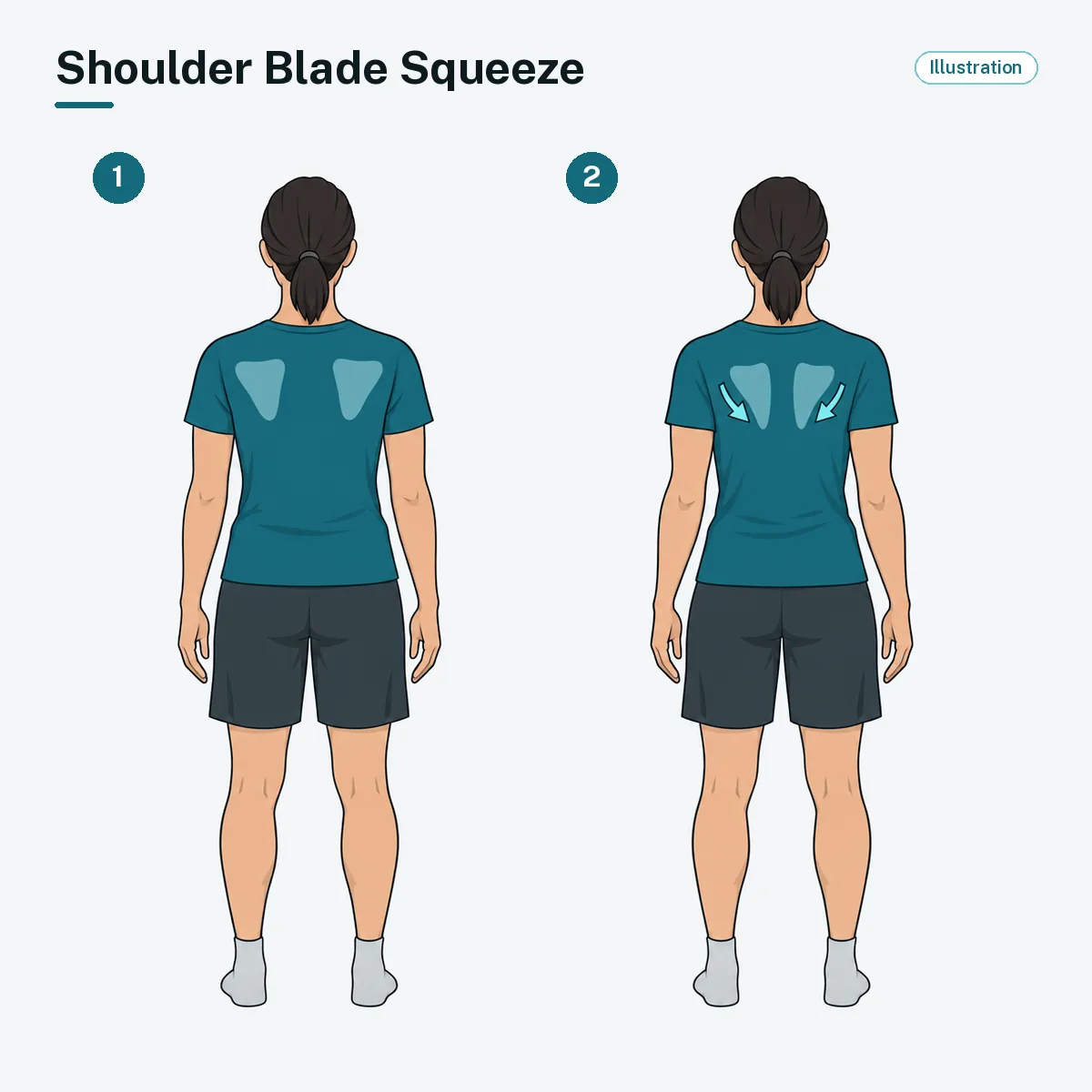 Shoulder blade squeeze: Pull your shoulder blades back and down. Hold 5 seconds. Repeat 10 times.
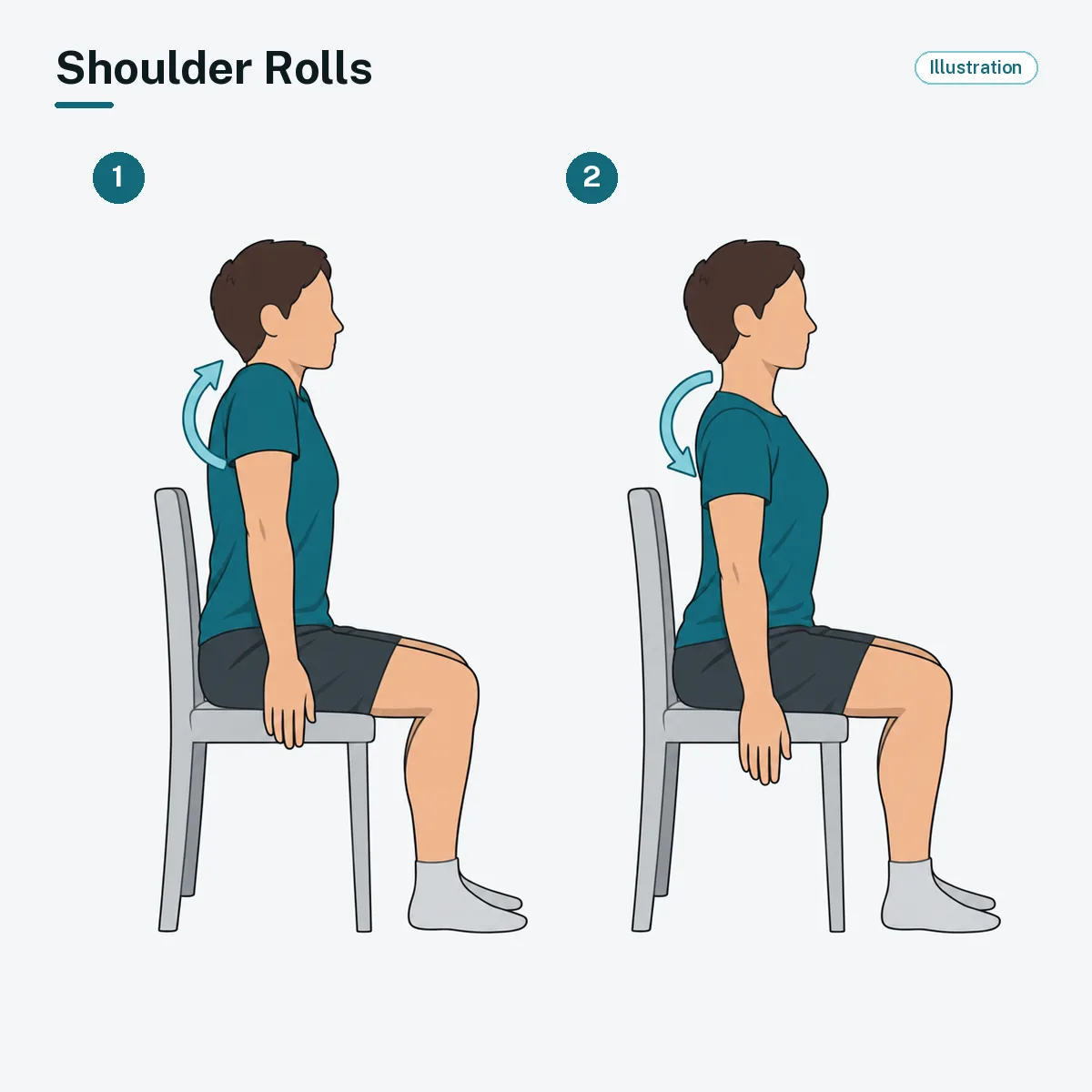 Shoulder rolls: Roll your shoulders up, back, and down in slow circles. Repeat 10 times.
Frequently asked questions
When should I see a doctor for neck pain?
Neck pain that lasts a long time, limits how far you can turn or tilt your head, or affects work, driving, or sleep may be worth discussing with your physician. Your physician may ask about your pain, posture, work setup, and any injury, and examine neck motion, tenderness, muscle tightness, strength, and sensation in the arms. You can leave with a plan aimed at easing pain and improving function.
Do I need an MRI or X-ray for neck pain?
Not everyone with neck pain needs imaging. Your physician may review any imaging you already have and order X-rays or an MRI only if needed. Talk with your physician about whether testing would change your treatment plan.
How is neck pain treated without surgery?
Non-surgical care may help reduce pain, improve motion, and get you back to work, driving, and sleep. Options can include physical therapy, medications, and ergonomic changes such as adjusting screen height, chair, and pillow. Cervical facet injections and medial branch blocks, radiofrequency ablation, trigger point injections, and regenerative options such as PRP for selected patients may also be considered. Your physician can help choose a plan.
Can injections help me do physical therapy for my neck pain?
When pain makes it hard to progress with physical therapy or home exercise, an image-guided injection may calm inflammation and reduce pain so you can take part more fully. The goal is to help your exercise program work better, not to replace it. Facet injections and medial branch blocks can also help identify and treat pain from arthritic joints. Your physician can help decide whether an injection fits your situation.
Sources
- Abnormal findings on magnetic resonance images of the cervical spines in 1211 asymptomatic subjects. Spine, 2015.
- Systematic literature review of imaging features of spinal degeneration in asymptomatic populations. American Journal of Neuroradiology, 2015.
Last updated: October 2026
