
Mid-Back Pain (Scoliosis and Kyphosis)
Mid-back pain arises in the thoracic spine, between the neck and lower back. It is often linked to posture, arthritis, or a curve in the spine such as scoliosis or kyphosis. Targeted rehabilitation can help reduce pain and improve posture at any age.
Reviewed by Samuel Rosenberg, DO, FAAPMR
- Mid-back pain arises in the thoracic spine, between the neck and lower back.
- Common symptoms: aching or stiffness between the shoulder blades; muscle tightness or spasm along the spine; rounded shoulders or a forward head posture; uneven shoulders, waist, or hips (scoliosis).
- Treatment options: Physical therapy, scoliosis-specific exercise programs, ergonomic changes, medications, trigger point injections, thoracic facet injections or radiofrequency ablation, bone health evaluation.
- Targeted rehabilitation can help reduce pain and improve posture at any age.
Understanding mid-back pain
The thoracic spine connects to the ribs and is built for stability. Long hours sitting, slouching, and weak back muscles can strain it. Scoliosis is a sideways curve of the spine, which can start in childhood or develop in adults from arthritis. Kyphosis is an increased forward rounding of the upper back, which can come from posture, arthritis, or compression fractures from osteoporosis.
Common symptoms
- Aching or stiffness between the shoulder blades
- Muscle tightness or spasm along the spine
- Rounded shoulders or a forward head posture
- Uneven shoulders, waist, or hips (scoliosis)
- Back fatigue after standing or sitting
- Pain that wraps around the ribs
Treatment options
- Physical therapy: Posture training, back extensor strengthening, and mobility work.
- Scoliosis-specific exercise programs: Targeted exercises aimed at improving alignment and control.
- Ergonomic changes: Workstation and screen-height adjustments.
- Medications: Anti-inflammatories and topical treatments.
- Trigger point injections: For tight, painful muscles.
- Thoracic facet injections or radiofrequency ablation: For arthritis-related pain.
- Bone health evaluation: Screening for osteoporosis when kyphosis is present.
Injections to support your therapy: When pain makes it hard to progress with physical therapy or home exercise, an image-guided injection may calm inflammation and reduce pain so you can participate more fully. The goal is to help your exercise program work better, not to replace it. Learn more about facet injections and medial branch blocks.
What to expect at your visit
Your physician will ask about your pain, posture, and daily activities. The exam checks spinal alignment, flexibility, strength, and tenderness. We may order standing X-rays to measure any curve. Your plan will focus on relief and on keeping your spine strong.
Home exercises
Focus on slow, controlled movement and good posture.
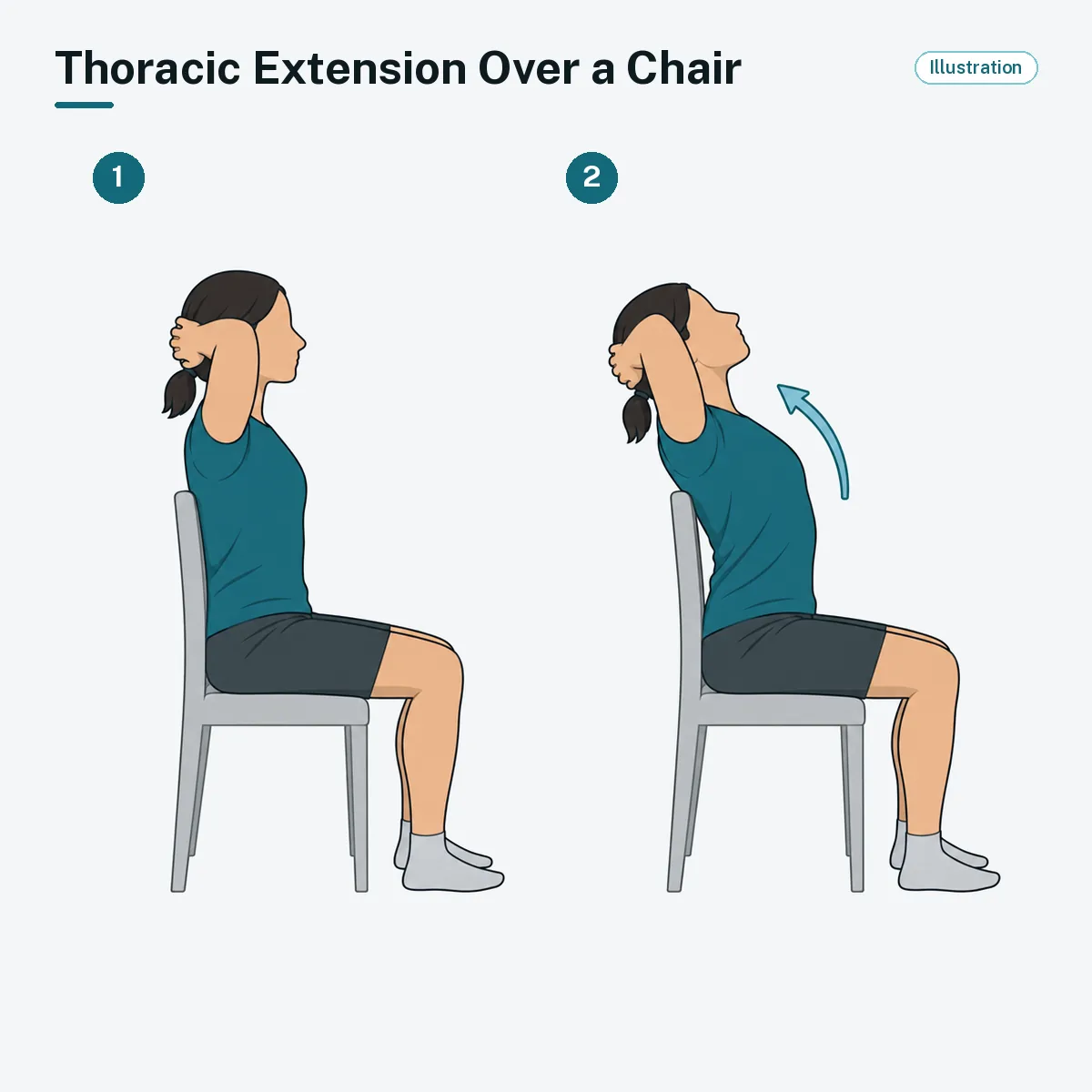 Thoracic extension over a chair: Sit with hands behind your head and gently arch your upper back over the chair back. Repeat 10 times.
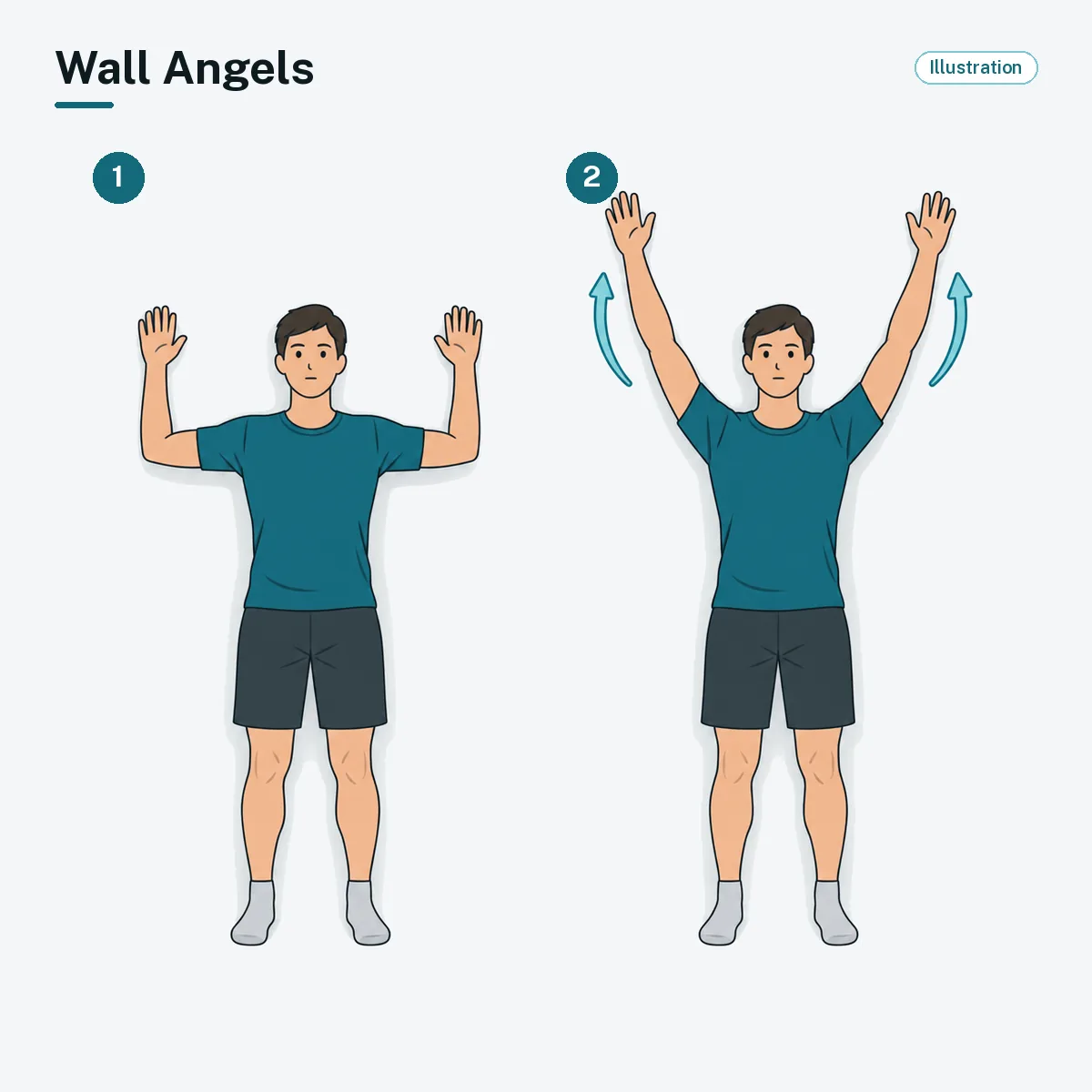 Wall angels: Stand with your back to a wall and slide your arms up and down like a snow angel. Repeat 10 times.
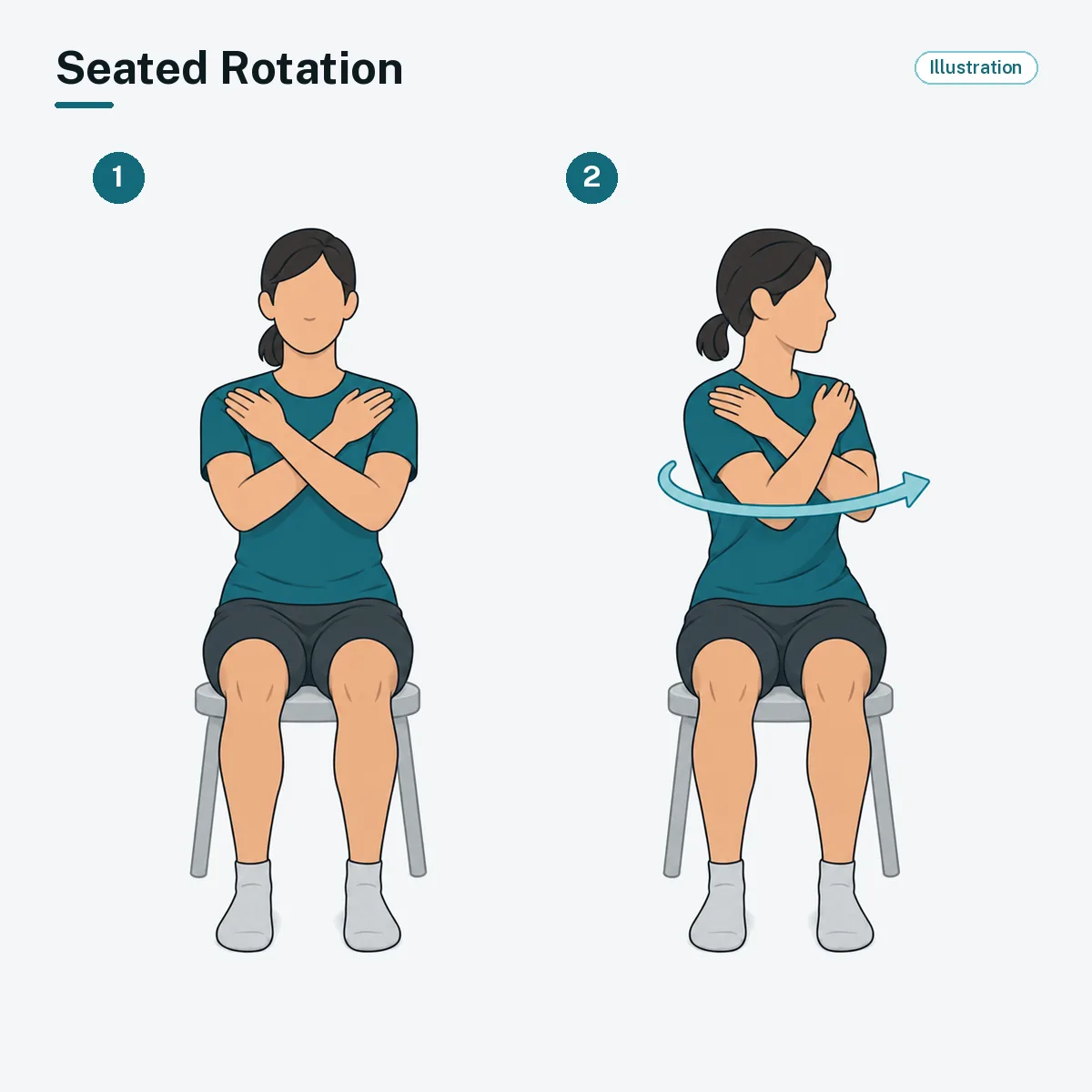 Seated rotation: Sit tall with arms crossed and turn your upper body to each side. Repeat 10 times each way.
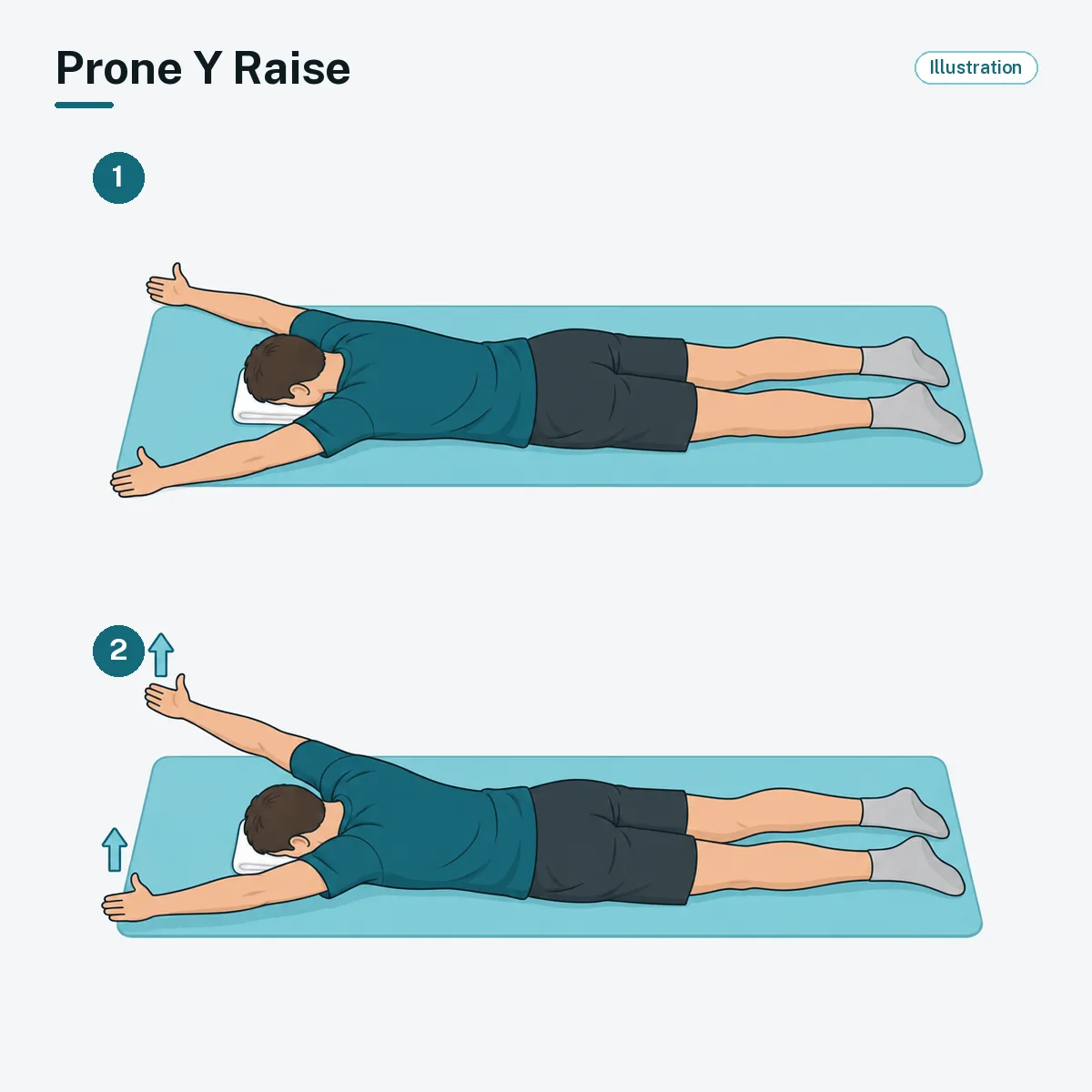 Prone Y raise: Lie face down and lift your arms in a Y shape. Hold 3 seconds. Repeat 10 times.
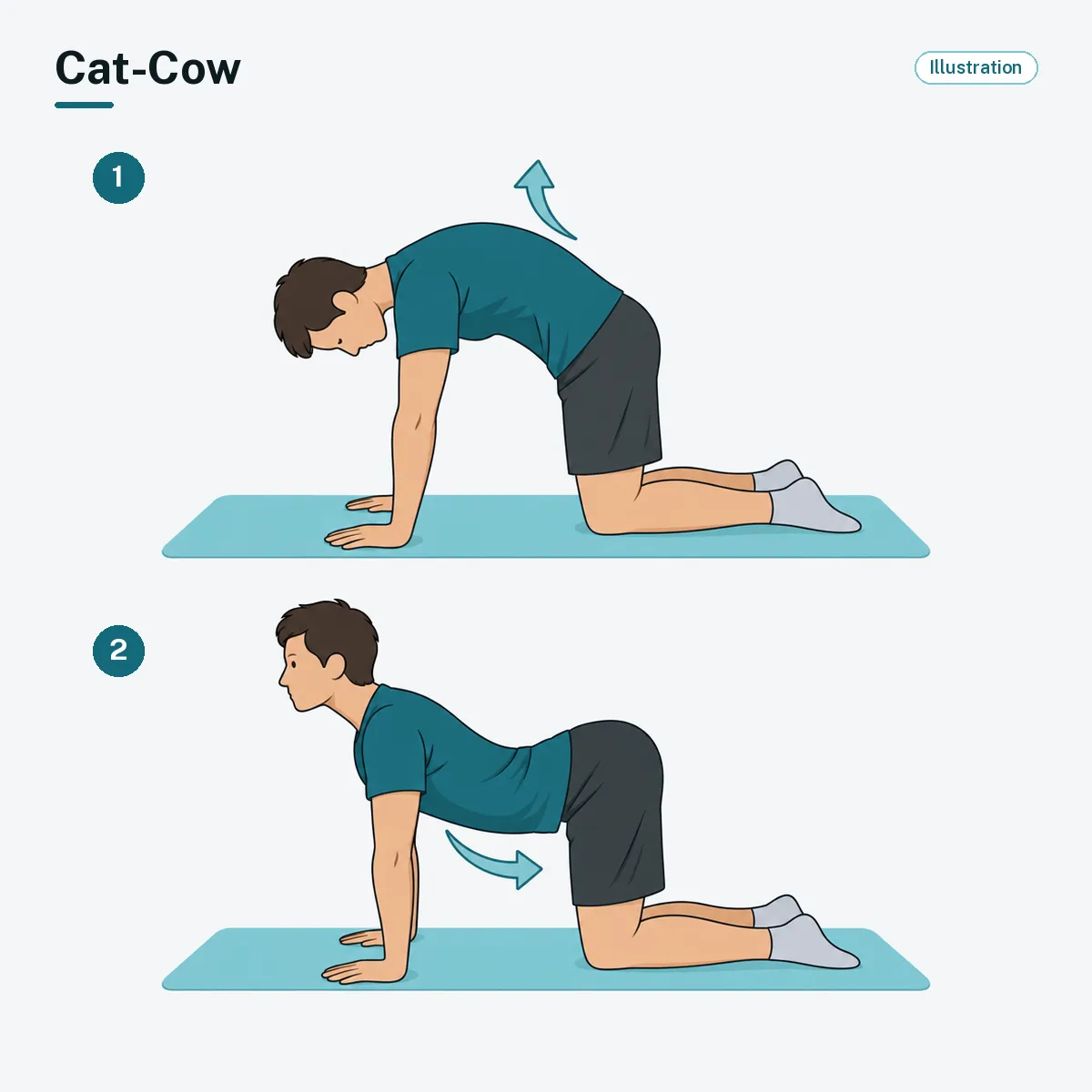 Cat-cow: On hands and knees, round and arch your back slowly. Repeat 10 times.
Frequently asked questions
How is mid-back pain from scoliosis or kyphosis treated without surgery?
Many people improve with nonsurgical care such as physical therapy for posture training, back extensor strengthening, and mobility work. Scoliosis-specific exercise programs, ergonomic changes, and medications like anti-inflammatories or topical treatments may also help. When kyphosis is present, a bone health evaluation to screen for osteoporosis may be suggested. Your physician can help build a plan for you.
Do I need an X-ray for mid-back pain?
Your physician may ask about your pain, posture, and daily activities, and the exam checks spinal alignment, flexibility, strength, and tenderness. Standing X-rays may be ordered to measure any curve. Your physician can help decide what testing, if any, makes sense for you.
Can injections help me do physical therapy for mid-back pain?
Your physician can discuss whether injections may help. When pain makes it hard to progress with physical therapy or home exercise, an image-guided injection may calm inflammation and reduce pain so you can participate more fully. Options can include trigger point injections, thoracic facet injections, or radiofrequency ablation. The goal is to help your exercise program work better, not to replace it.
What exercises can I do at home for mid-back pain?
Home exercises focus on slow, controlled movement and good posture. Examples include thoracic extension over a chair, wall angels, seated rotation, prone Y raises held for 3 seconds, and cat-cow, each repeated about 10 times. Your physician can help decide which movements fit your situation.
Sources
- The treatment of symptomatic osteoporotic spinal compression fractures (AAOS guideline). Journal of the American Academy of Orthopaedic Surgeons, 2011.
- Exercise for preventing and treating osteoporosis in postmenopausal women. Cochrane Database of Systematic Reviews, 2011.
Last updated: October 2026
