
Frozen Shoulder (Adhesive Capsulitis)
Frozen shoulder causes pain and a gradual loss of shoulder motion until the arm feels stuck. It is most common between ages 40 and 60, and in people with diabetes or thyroid disease. Early treatment may help shorten recovery and restore motion.
Reviewed by Samuel Rosenberg, DO, FAAPMR
- Frozen shoulder causes pain and a gradual loss of shoulder motion until the arm feels stuck.
- Common symptoms: gradual onset of deep shoulder pain; steadily increasing stiffness in all directions; difficulty reaching overhead, behind your back, or out to the side; pain at night that disrupts sleep.
- Treatment options: Physical therapy, medications, ultrasound-guided corticosteroid injections, hydrodilatation, suprascapular nerve block, blood sugar management, surgical referral.
- Early treatment may help shorten recovery and restore motion.
Understanding frozen shoulder
The shoulder joint is surrounded by a flexible capsule. In frozen shoulder, this capsule becomes inflamed, then thickens and tightens. It often follows a period of reduced shoulder use, such as after an injury or surgery, but can occur on its own. The condition usually moves through three stages: a painful freezing stage, a stiff frozen stage, and a thawing stage when motion gradually improves. Recovery often takes a year or more, and some people have lasting stiffness.
Common symptoms
- Gradual onset of deep shoulder pain
- Steadily increasing stiffness in all directions
- Difficulty reaching overhead, behind your back, or out to the side
- Pain at night that disrupts sleep
- Trouble with dressing, grooming, or fastening a seatbelt
Treatment options
- Physical therapy: Gentle, consistent stretching to help restore motion.
- Medications: Anti-inflammatories to manage pain.
- Ultrasound-guided corticosteroid injections: Often most helpful in the early, painful stage.
- Hydrodilatation: An ultrasound-guided injection of fluid that aims to stretch the tight capsule.
- Suprascapular nerve block: Can reduce pain to help you stretch more effectively.
- Blood sugar management: Important for people with diabetes.
- Surgical referral: For the rare case that does not improve with other care.
Injections to support your therapy: When pain makes it hard to progress with physical therapy or home exercise, an image-guided injection may calm inflammation and reduce pain so you can participate more fully. The goal is to help your exercise program work better, not to replace it. Learn more about therapeutic injections.
What to expect at your visit
Your physician will ask when the pain started and how your motion has changed. The exam measures active and passive shoulder motion in every direction, which helps separate frozen shoulder from a rotator cuff problem. Ultrasound or X-rays may be used to rule out other causes. We will create a plan aimed at reducing pain and getting your shoulder moving again.
Home exercises
Stretch to a point of mild tension, not sharp pain. Do these 2–3 times per day.
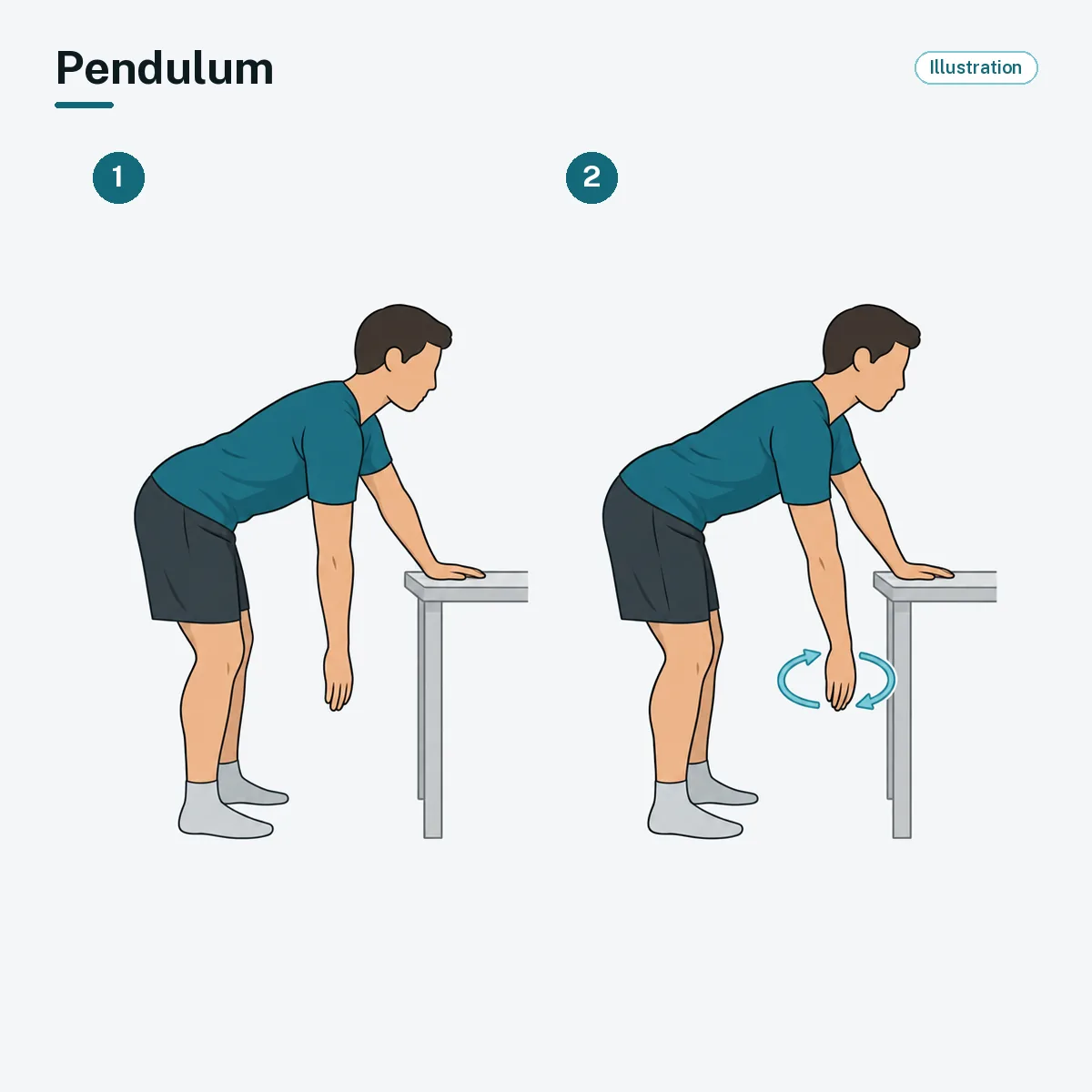 Pendulum: Lean forward and let the arm hang. Swing it in small circles. 30 seconds each direction.
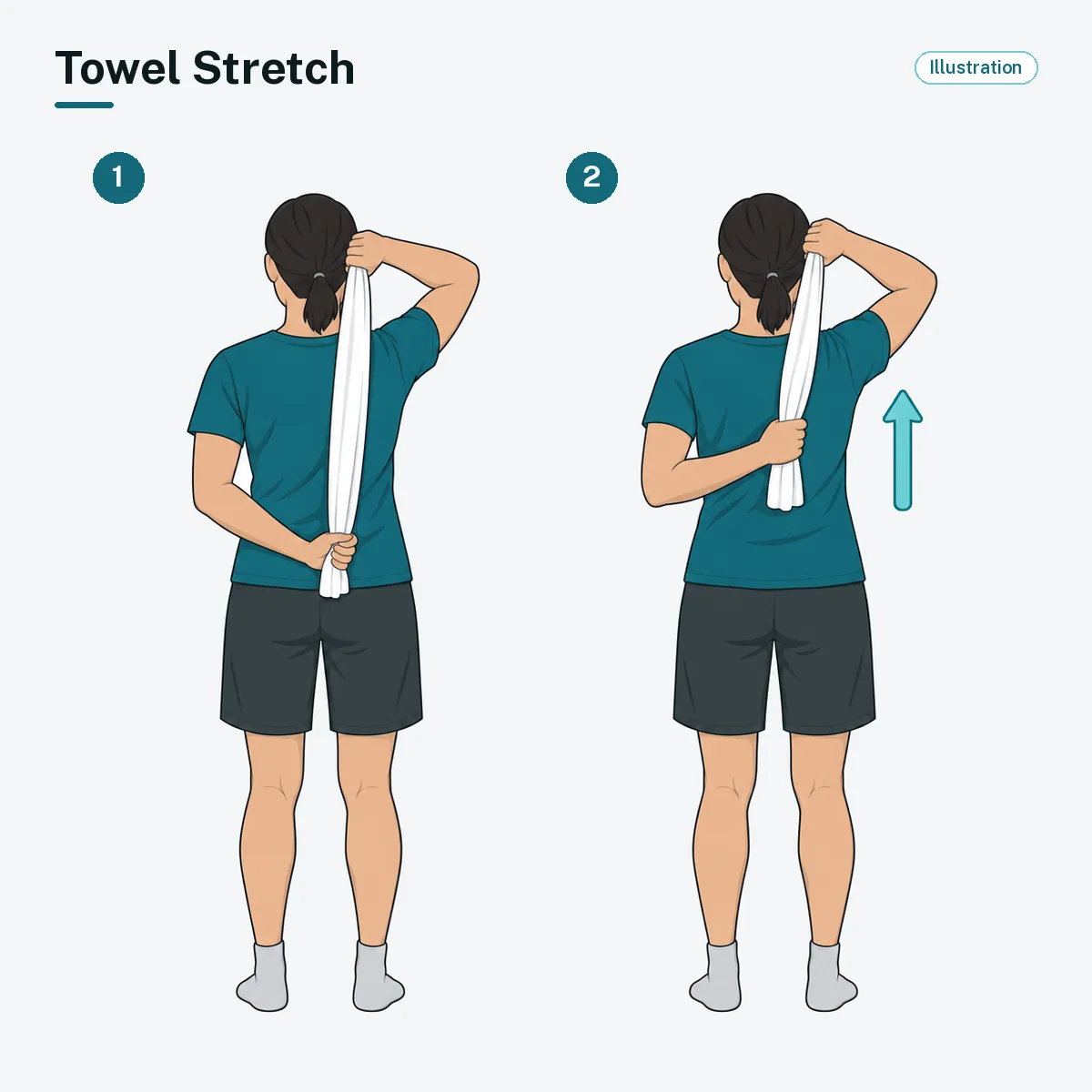 Towel stretch: Hold a towel behind your back with both hands. Use the top hand to gently pull the lower arm up. Hold 20–30 seconds. Repeat 3 times.
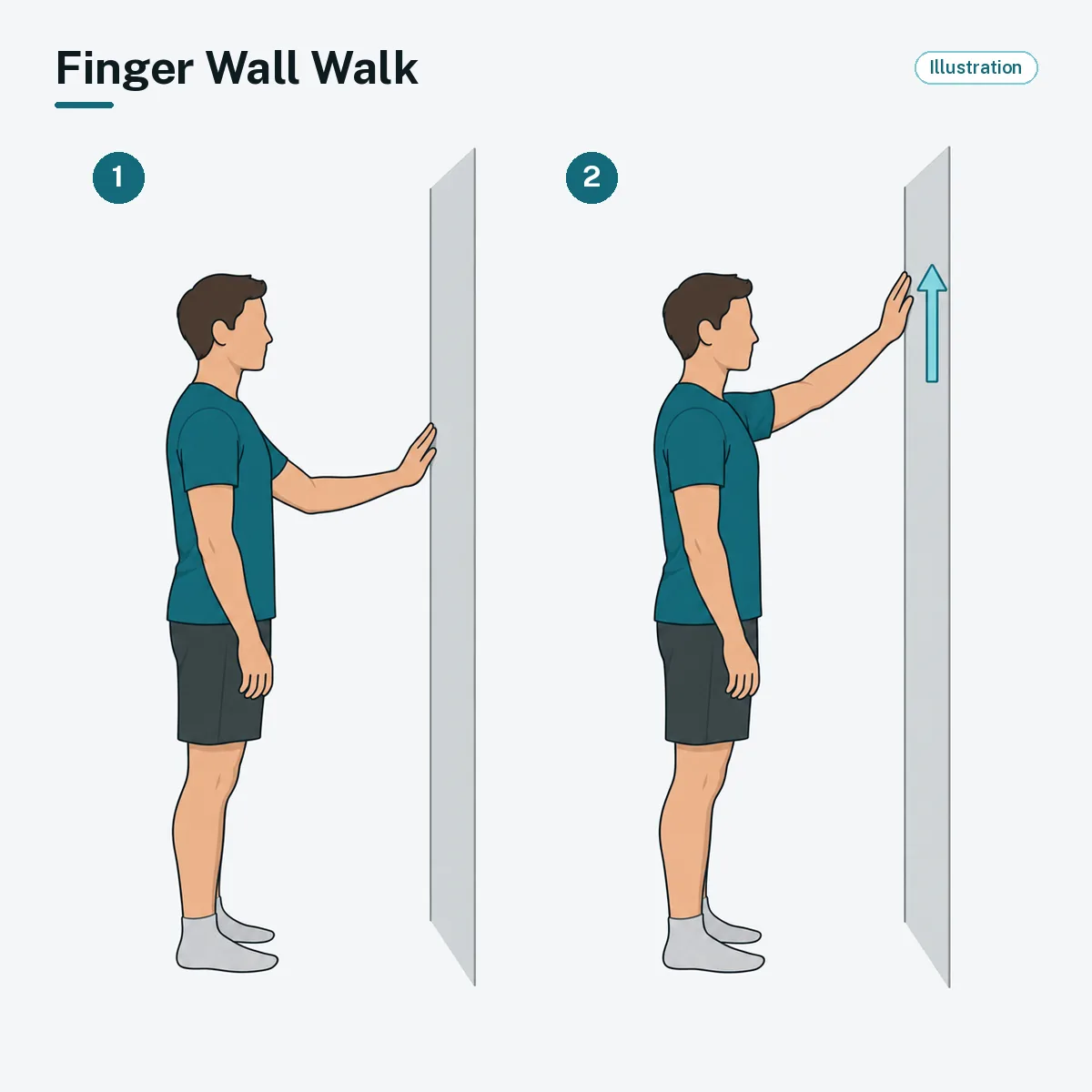 Finger wall walk: Face a wall and walk your fingers up as high as comfortable. Repeat 10 times.
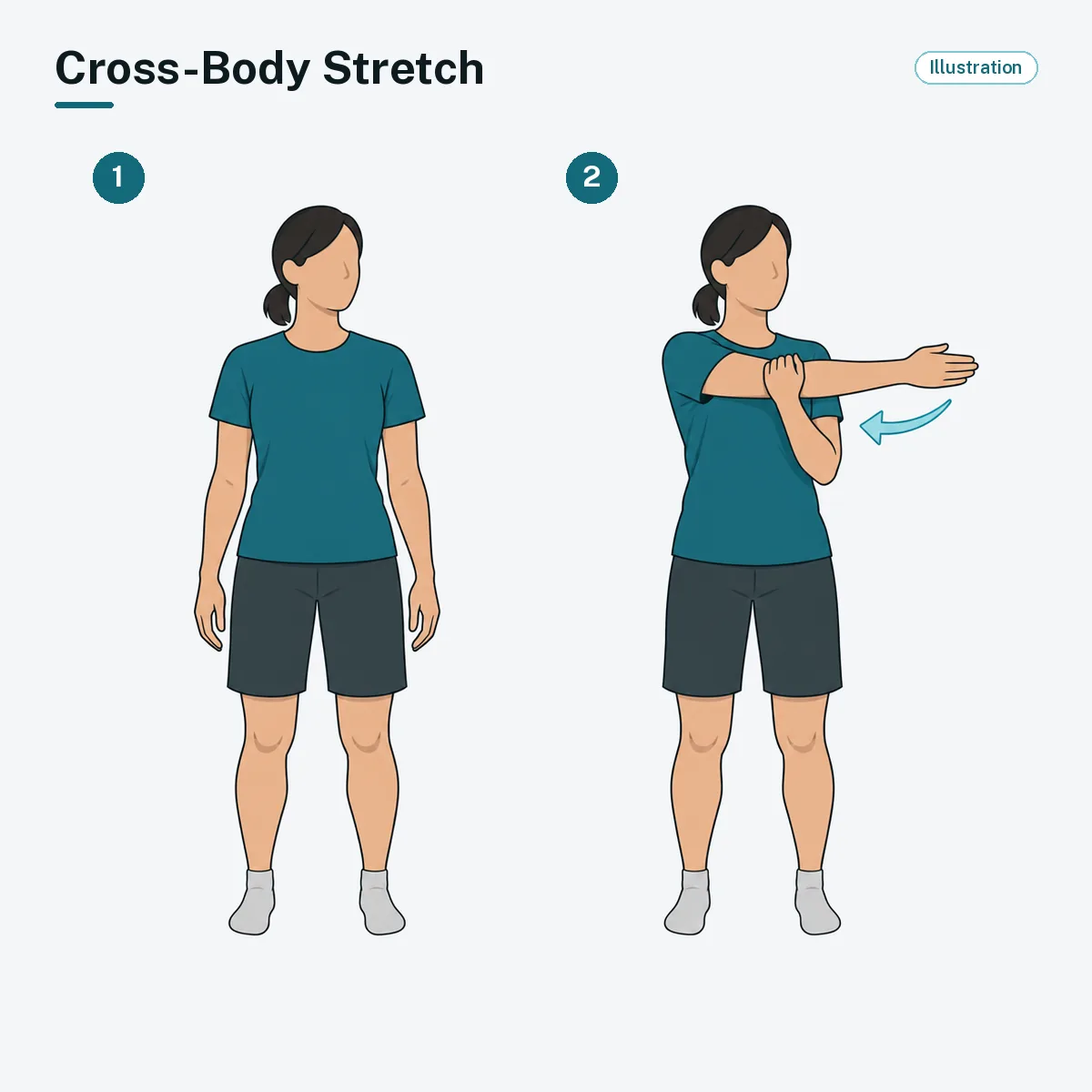 Cross-body stretch: Bring the arm across your chest and hold it with the other hand. Hold 30 seconds. Repeat 3 times.
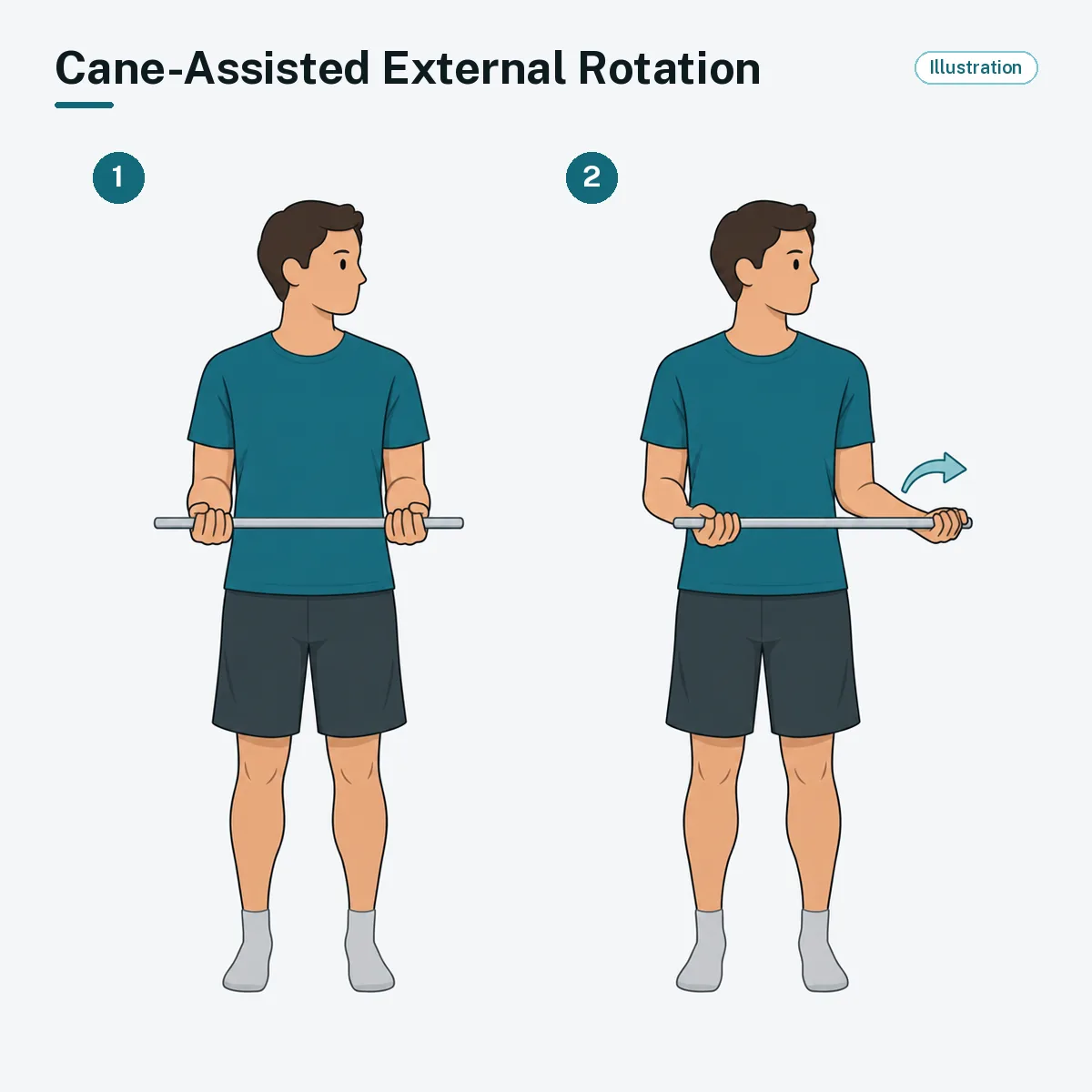 Cane-assisted external rotation: With your elbow at your side, use a cane to gently push the arm outward. Hold 20 seconds. Repeat 5 times.
Frequently asked questions
When should I see a doctor for frozen shoulder?
It may help to be seen for gradual deep shoulder pain, stiffness that keeps increasing in all directions, or difficulty reaching overhead, behind your back, or out to the side. Night pain that disrupts sleep, or trouble with dressing, grooming, or fastening a seatbelt, can also be reasons to be checked. Early treatment may help shorten recovery and restore motion, so talk with your physician.
Do I need an X-ray or ultrasound for frozen shoulder?
Not everyone needs imaging. Your physician may ask when the pain started and how your motion has changed, and the exam measures active and passive shoulder motion in every direction, which can help separate frozen shoulder from a rotator cuff problem. Ultrasound or X-rays may be used to rule out other causes. Your physician can help decide if testing is right for you.
How is frozen shoulder treated without surgery?
Treatment often includes gentle, consistent physical therapy stretching to help restore motion, along with anti-inflammatory medications to manage pain. Other options may include ultrasound-guided corticosteroid injections, hydrodilatation, or a suprascapular nerve block, and blood sugar management is important for people with diabetes. Surgical referral is for the rare case that does not improve with other care. Your physician can help decide which options fit your situation.
Can injections help me do physical therapy for frozen shoulder?
When pain makes it hard to progress with physical therapy or home exercise, an image-guided injection may calm inflammation and reduce pain so you can participate more fully. Ultrasound-guided corticosteroid injections are often helpful in the early, painful stage, and a suprascapular nerve block can reduce pain to help you stretch more effectively. The goal is to support your exercise program, not replace it.
Sources
- Natural history of frozen shoulder: fact or fiction? A systematic review. Physiotherapy, 2017.
Last updated: October 2026
