
Shoulder Pain (Rotator Cuff and Impingement)
Shoulder pain can make it hard to reach overhead, dress, or sleep on your side. Rotator cuff problems and impingement are among the most common causes. Many improve without surgery with early, appropriate treatment.
Reviewed by Samuel Rosenberg, DO, FAAPMR
- Shoulder pain can make it hard to reach overhead, dress, or sleep on your side.
- Common symptoms: pain at the top or outer side of the shoulder; pain when lifting the arm overhead or reaching behind your back; night pain, especially lying on the affected side; weakness when lifting or rotating the arm.
- Treatment options: Physical therapy, activity modification, medications, ultrasound-guided injections, PRP injections, barbotage, surgical referral.
- Many improve without surgery with early, appropriate treatment.
Understanding shoulder pain
The rotator cuff is a group of four muscles and tendons that keep the shoulder stable and help lift the arm. With overhead use, aging, or injury, these tendons can become irritated (tendinitis), develop calcium deposits, or tear. Impingement happens when the tendons and the bursa above them get pinched during arm movement. The biceps tendon at the front of the shoulder can also become inflamed.
Common symptoms
- Pain at the top or outer side of the shoulder
- Pain when lifting the arm overhead or reaching behind your back
- Night pain, especially lying on the affected side
- Weakness when lifting or rotating the arm
- Clicking or catching with movement
Treatment options
- Physical therapy: Rotator cuff and shoulder blade strengthening, and posture correction.
- Activity modification: Temporarily limiting overhead and repetitive motions.
- Medications: Anti-inflammatories and topical treatments.
- Ultrasound-guided injections: Precise corticosteroid injections into the bursa or joint.
- PRP injections: Can be considered for rotator cuff tendon. Study results are mixed, so your physician can discuss whether it is a reasonable option.
- Barbotage: An ultrasound-guided procedure to break up and remove calcium deposits.
- Surgical referral: For large or full-thickness tears that do not improve.
Injections to support your therapy: When pain makes it hard to progress with physical therapy or home exercise, an image-guided injection may calm inflammation and reduce pain so you can participate more fully. The goal is to help your exercise program work better, not to replace it. Learn more about therapeutic injections.
What to expect at your visit
Your physician will ask about the onset of pain, activities that trigger it, and your sleep. The exam tests shoulder motion and the strength of each rotator cuff muscle, with special tests for impingement. In-office diagnostic ultrasound lets us see the tendons in real time, often during the same visit. We order X-rays or an MRI if needed.
Home exercises
Keep movements below shoulder height at first. Stop if you feel sharp pain.
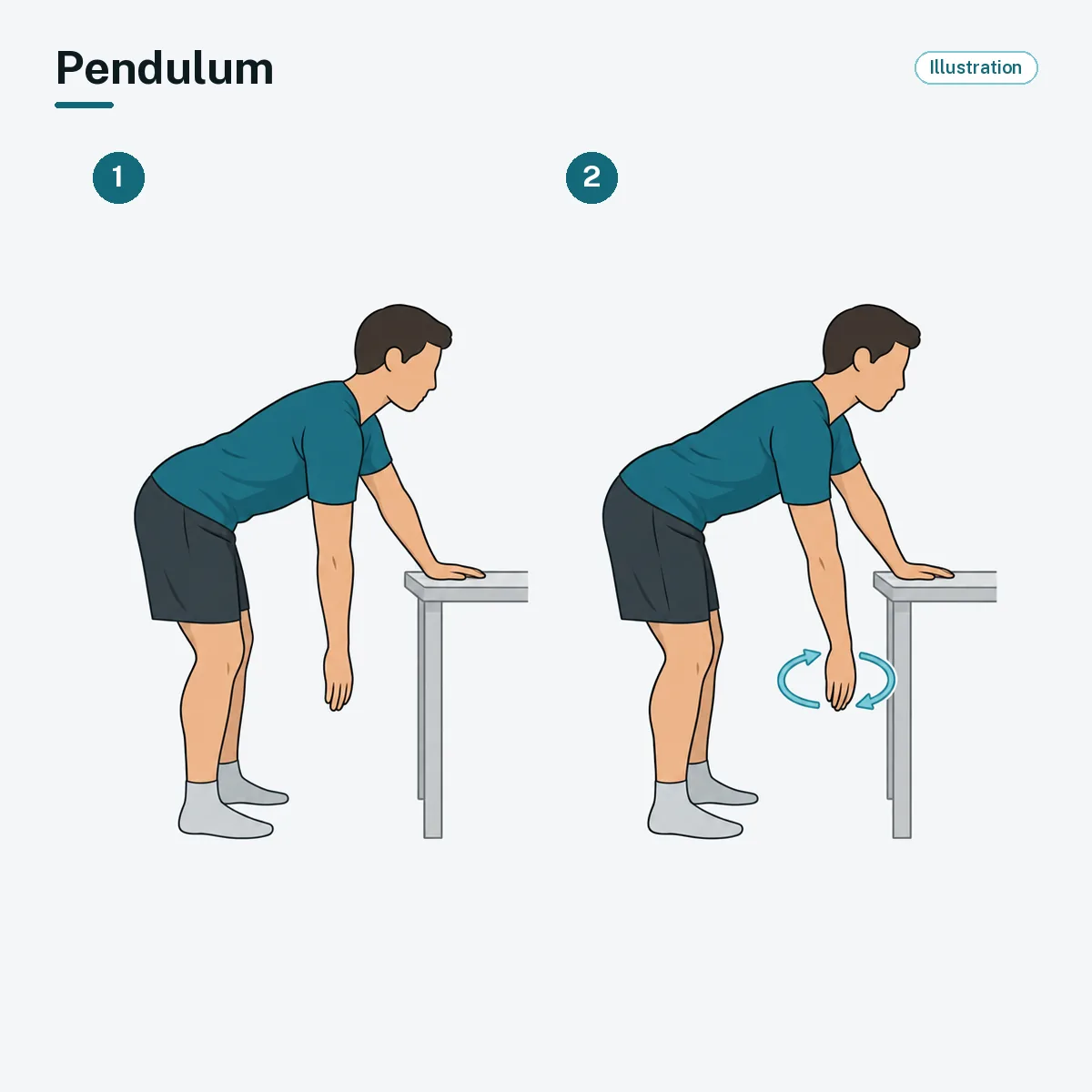 Pendulum: Lean forward with your good hand on a table. Let the sore arm hang and swing it in small circles. 30 seconds each direction.
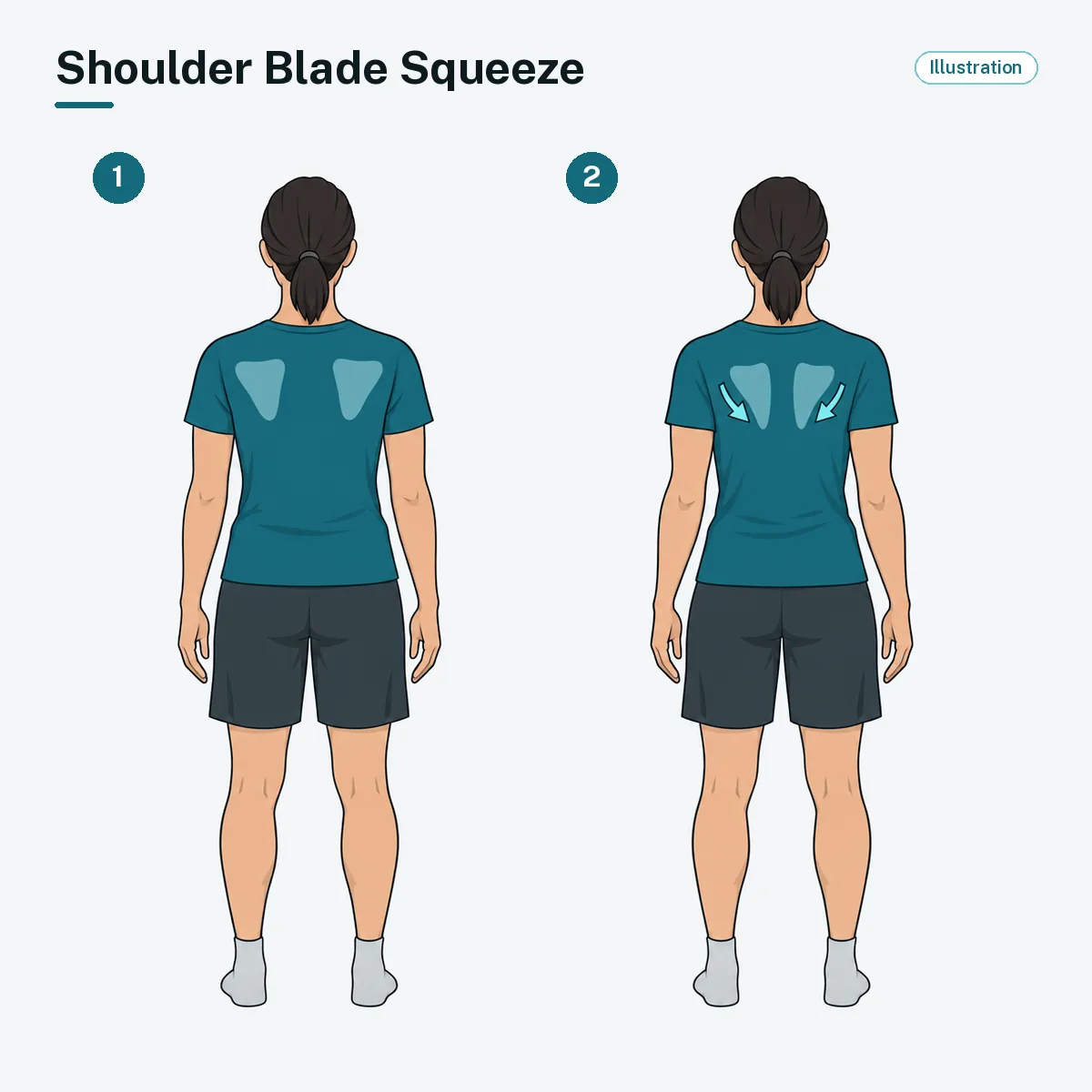 Shoulder blade squeeze: Pull your shoulder blades back and down. Hold 5 seconds. Repeat 10 times.
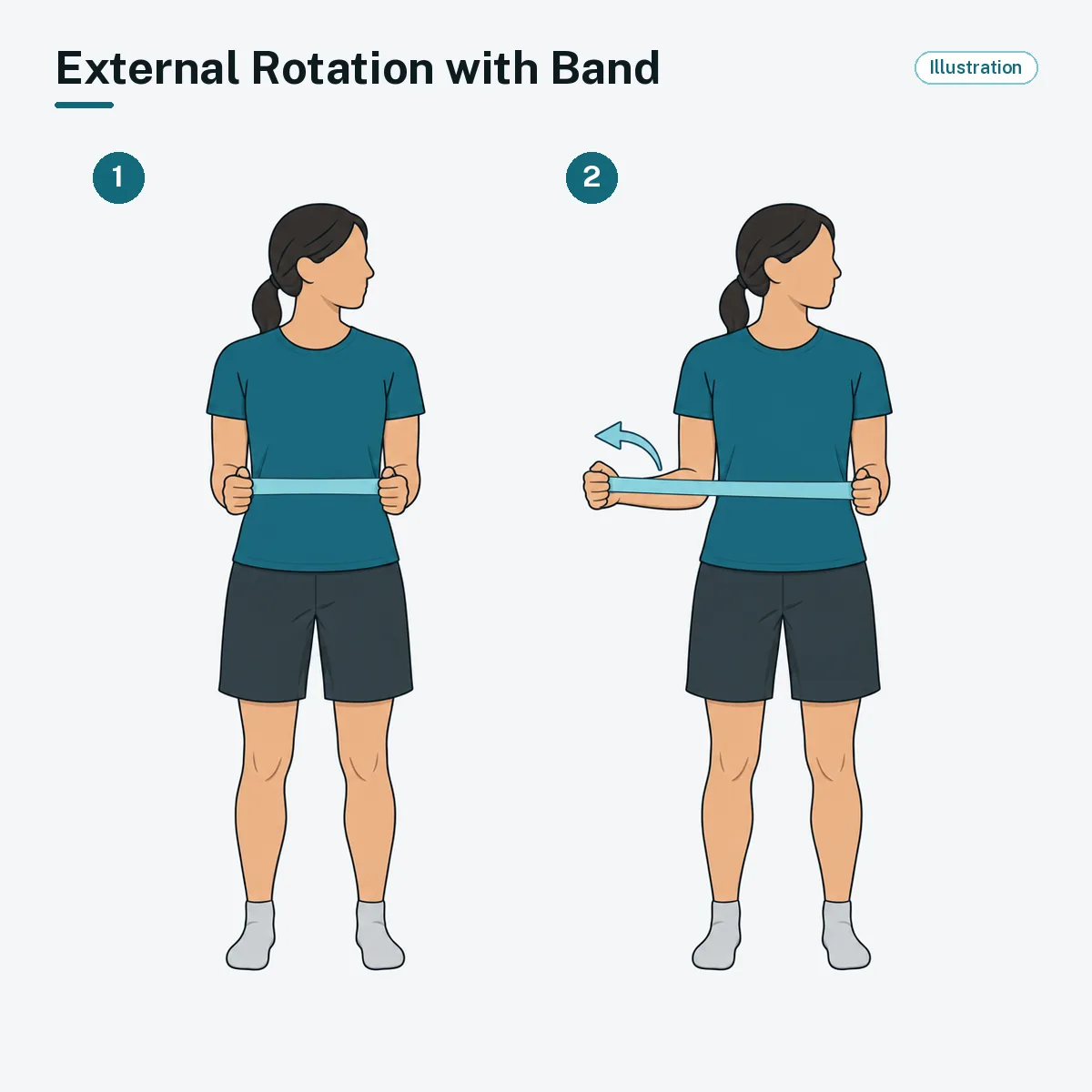 External rotation with band: Keep your elbow at your side bent to 90 degrees. Rotate your forearm outward against a light band. Repeat 10 times.
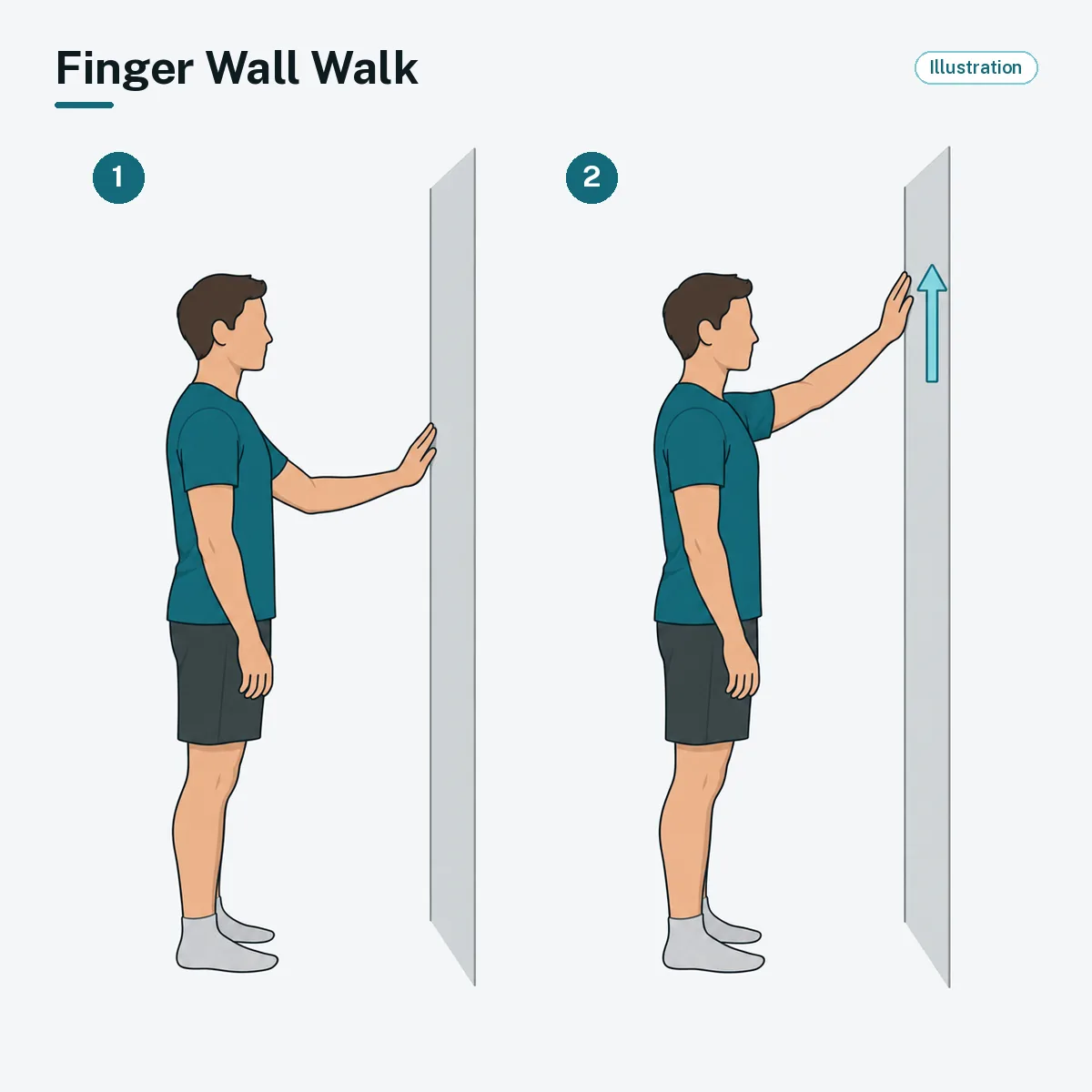 Wall walk: Face a wall and walk your fingers up as high as comfortable. Repeat 5 times.
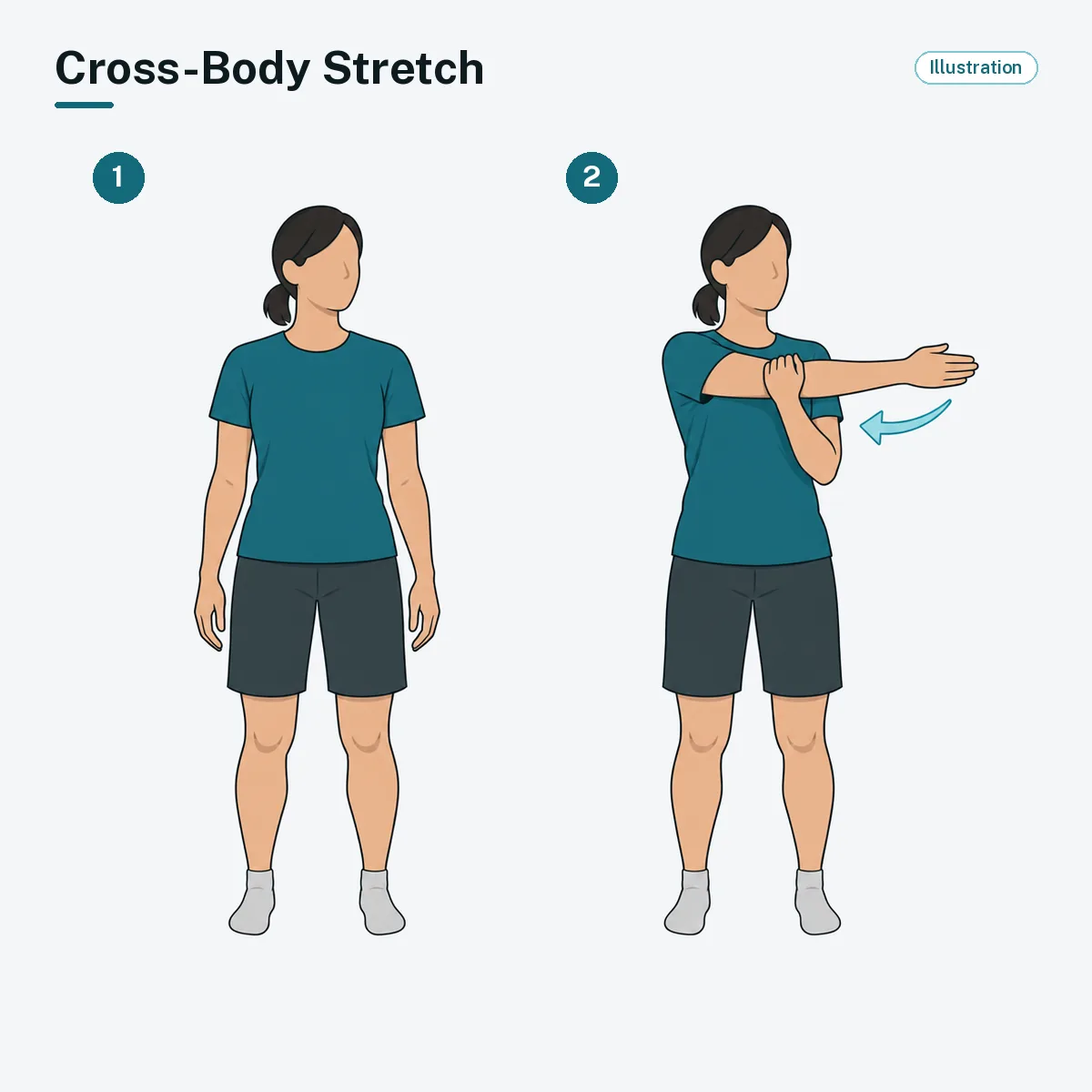 Cross-body stretch: Bring your arm across your chest and hold it with the other hand. Hold 30 seconds. Repeat 3 times.
Frequently asked questions
When should I see a doctor for shoulder pain?
Shoulder pain that makes it hard to reach overhead, dress, or sleep on your side may be worth discussing with your physician. Night pain when lying on the affected side, weakness when lifting or rotating the arm, or clicking and catching with movement can also be checked. Many improve without surgery with early, appropriate treatment.
Do I need an MRI for shoulder pain?
Not necessarily. Your physician may ask about the onset of pain, activities that trigger it, and your sleep, then test shoulder motion and the strength of each rotator cuff muscle, with special tests for impingement. In-office diagnostic ultrasound can show the tendons in real time, often during the same visit. X-rays or an MRI may be ordered if needed.
How is rotator cuff or impingement shoulder pain treated without surgery?
Many improve without surgery. Options can include physical therapy for rotator cuff and shoulder blade strengthening and posture correction, temporarily limiting overhead and repetitive motions, and medications such as anti-inflammatories and topical treatments. Ultrasound-guided injections, PRP injections, and barbotage for calcium deposits may also be considered. Your physician can discuss surgical referral for large or full-thickness tears that do not improve.
Can a shoulder injection help me do physical therapy?
It may. When pain makes it hard to progress with physical therapy or home exercise, an image-guided injection may calm inflammation and reduce pain so you can take part more fully. The goal is to help your exercise program work better, not to replace it, and your physician can help decide whether an injection is appropriate for you.
Sources
- Platelet-rich plasma injections in the treatment of chronic rotator cuff tendinopathy: a randomized controlled trial with 1-year follow-up. American Journal of Sports Medicine, 2013.
- Platelet-rich therapies for musculoskeletal soft tissue injuries. Cochrane Database of Systematic Reviews, 2014.
Last updated: October 2026
