
Hip Pain (Hip Bursitis and Gluteal Tendinopathy)
Pain on the outside of the hip is very common, especially in adults over 40. It is often called hip bursitis, but it often involves the gluteal tendons as well. This condition often responds well to targeted, non-surgical care.
Reviewed by Samuel Rosenberg, DO, FAAPMR
- Pain on the outside of the hip is very common, especially in adults over 40.
- Common symptoms: pain on the outer hip that may spread down the side of the thigh; pain when lying on the affected side; pain with stairs, standing up, or walking long distances; tenderness when pressing on the outer hip.
- Treatment options: Physical therapy, activity changes, medications, ultrasound-guided injections, PRP injections, shockwave therapy referral.
- This condition often responds well to targeted, non-surgical care.
Understanding outer hip pain
The bony point on the outside of the hip is called the greater trochanter. The gluteal tendons attach there, and a fluid-filled sac (the bursa) cushions the area. Weak hip muscles, prolonged pressure, a leg-length difference, or a fall can irritate these tissues. Doctors call this greater trochanteric pain syndrome. Hip pain can also come from the joint itself or from the low back, so a careful exam matters.
Common symptoms
- Pain on the outer hip that may spread down the side of the thigh
- Pain when lying on the affected side
- Pain with stairs, standing up, or walking long distances
- Tenderness when pressing on the outer hip
- Pain when crossing your legs
Treatment options
- Physical therapy: Gluteal strengthening is an important part of long-term care.
- Activity changes: Avoid crossing legs and sleep with a pillow between your knees.
- Medications: Anti-inflammatories and topical treatments.
- Ultrasound-guided injections: Precise corticosteroid injections into the bursa.
- PRP injections: May help when gluteal tendons are damaged or pain keeps returning.
- Shockwave therapy referral: An option for persistent tendon pain.
Injections to support your therapy: When pain makes it hard to progress with physical therapy or home exercise, an image-guided injection may calm inflammation and reduce pain so you can participate more fully. The goal is to help your exercise program work better, not to replace it. Learn more about therapeutic injections.
What to expect at your visit
Your physician will ask where your pain is, what triggers it, and how it affects sleep and walking. The exam checks hip motion, strength, tenderness, and your low back. In-office ultrasound can show the bursa and gluteal tendons during your visit. X-rays may be ordered to check for hip arthritis.
Home exercises
Avoid stretches that press directly on the sore side.
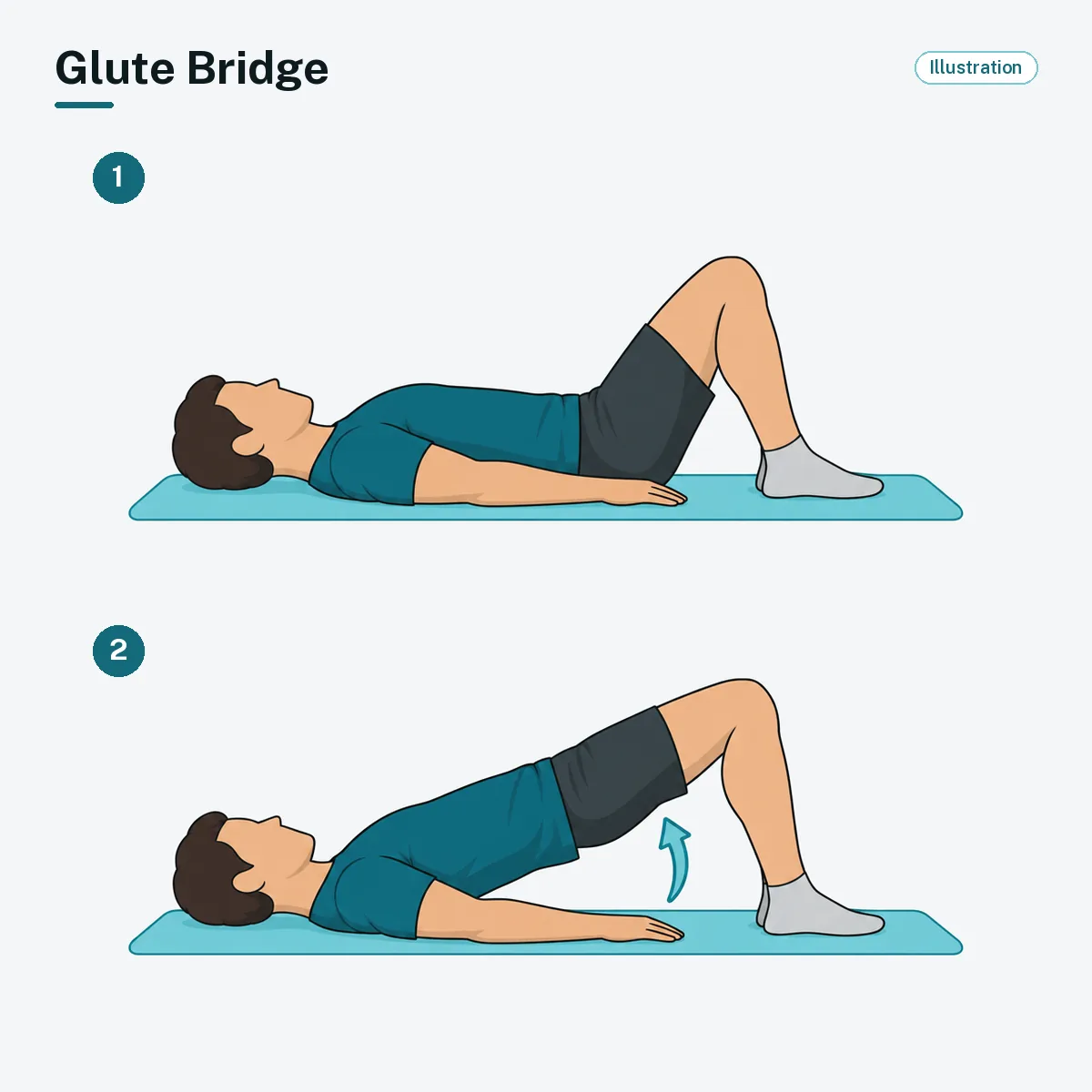 Glute bridge: Lie on your back with knees bent. Squeeze your buttocks and lift your hips. Hold 3 seconds. Repeat 10 times.
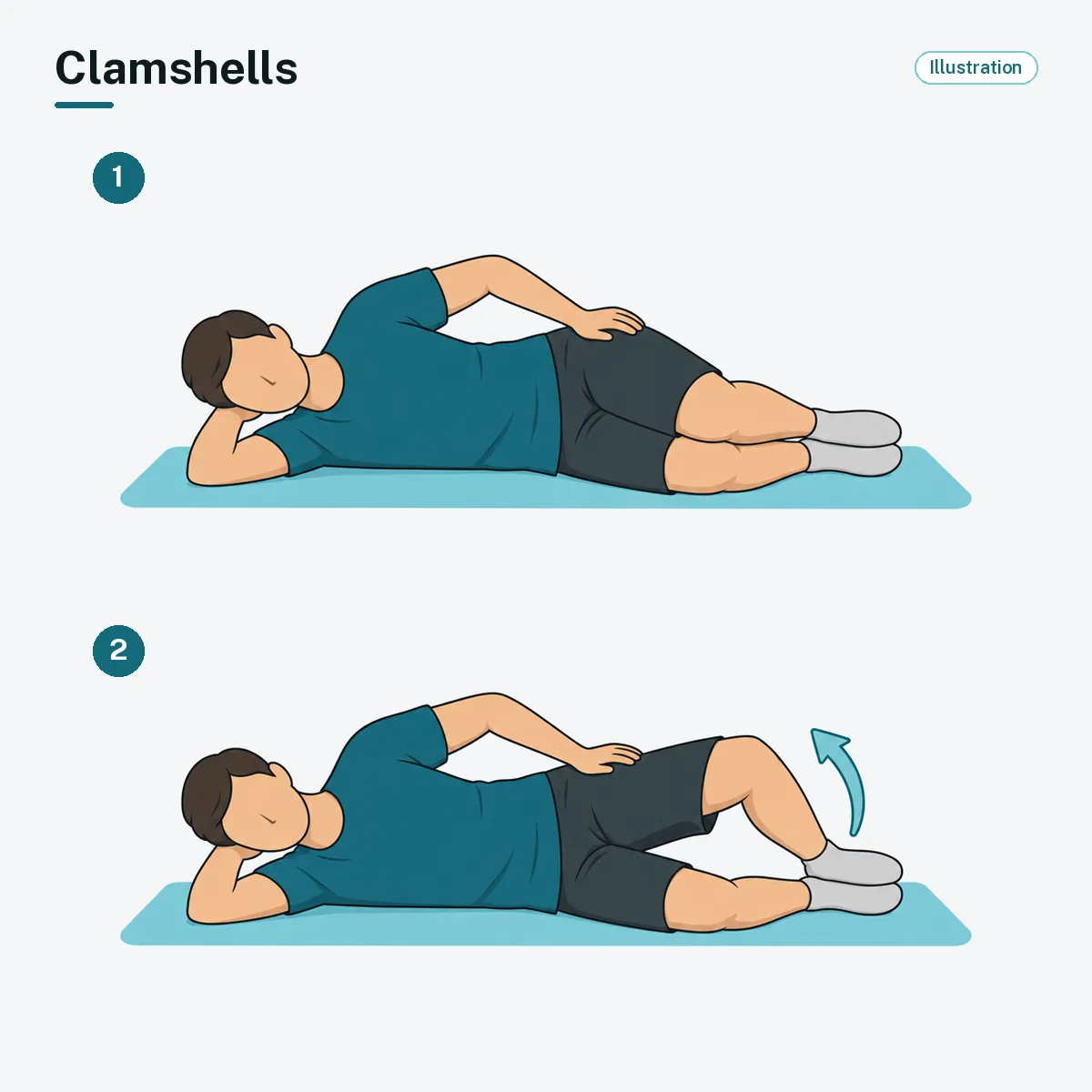 Clamshells: Lie on your good side with knees bent. Keep your feet together and open your top knee. Repeat 12 times.
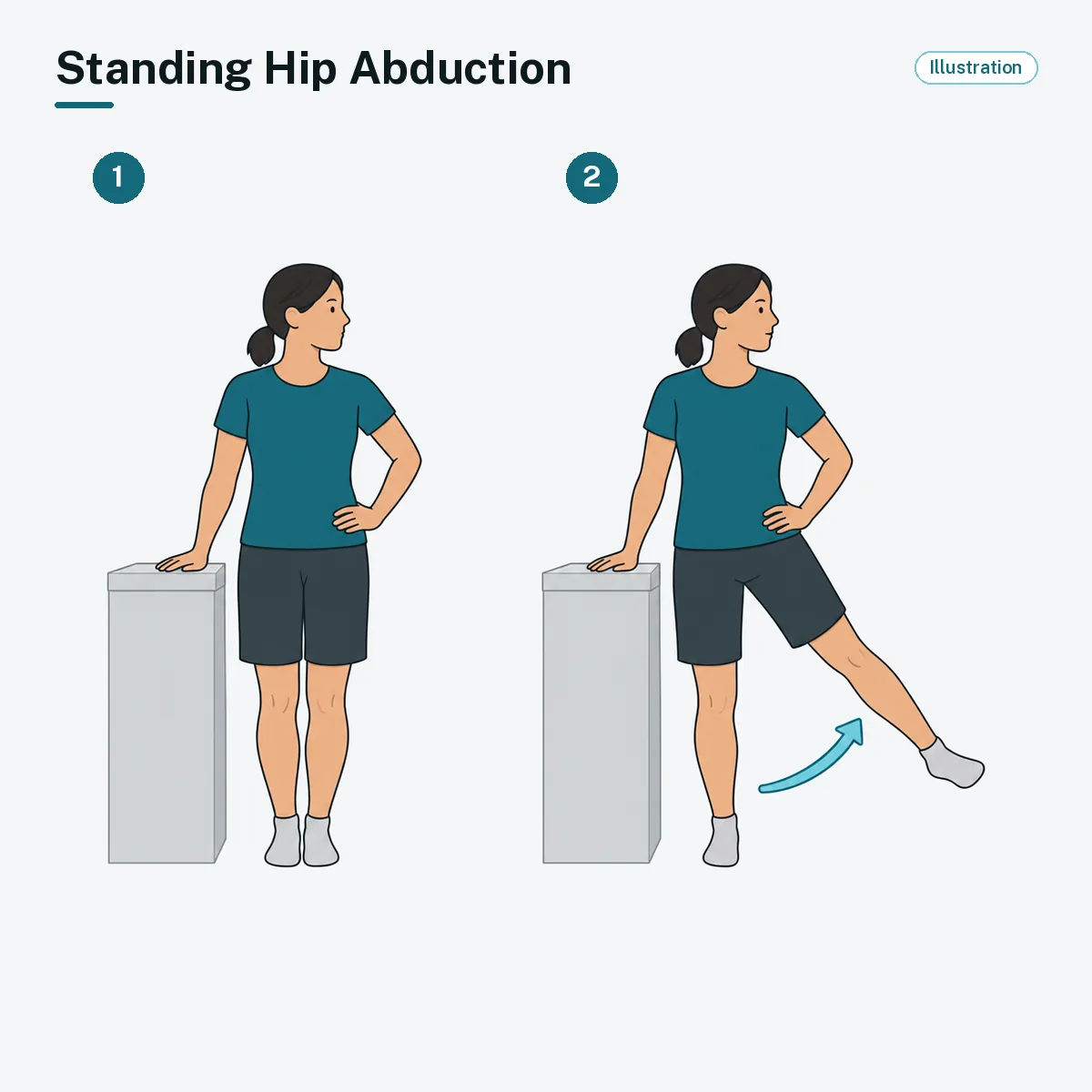 Standing hip abduction: Hold a counter and lift one leg out to the side, keeping your trunk upright. Repeat 10 times per side.
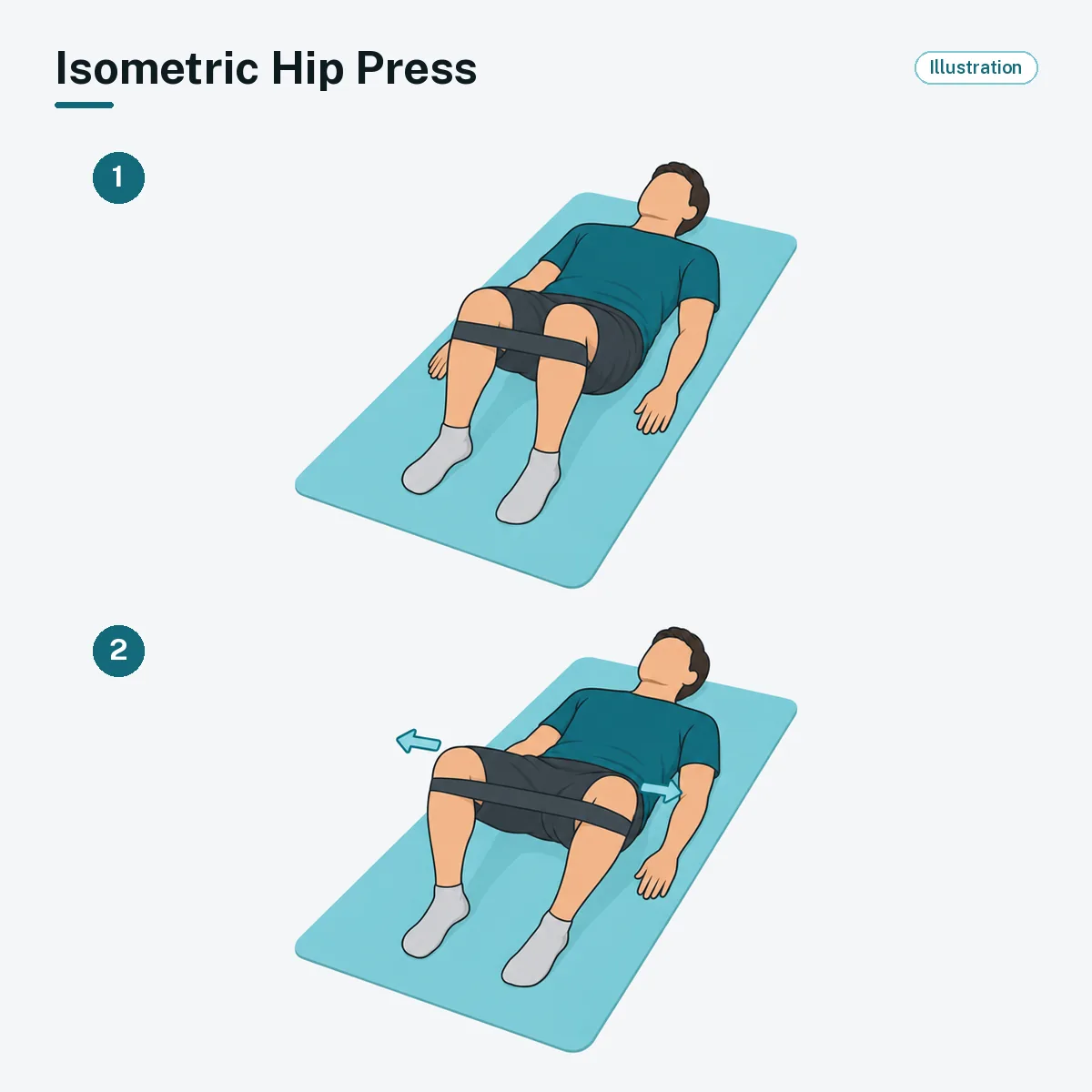 Isometric hip press: Lie on your back with a belt around your knees. Press outward against the belt for 30 seconds. Repeat 5 times.
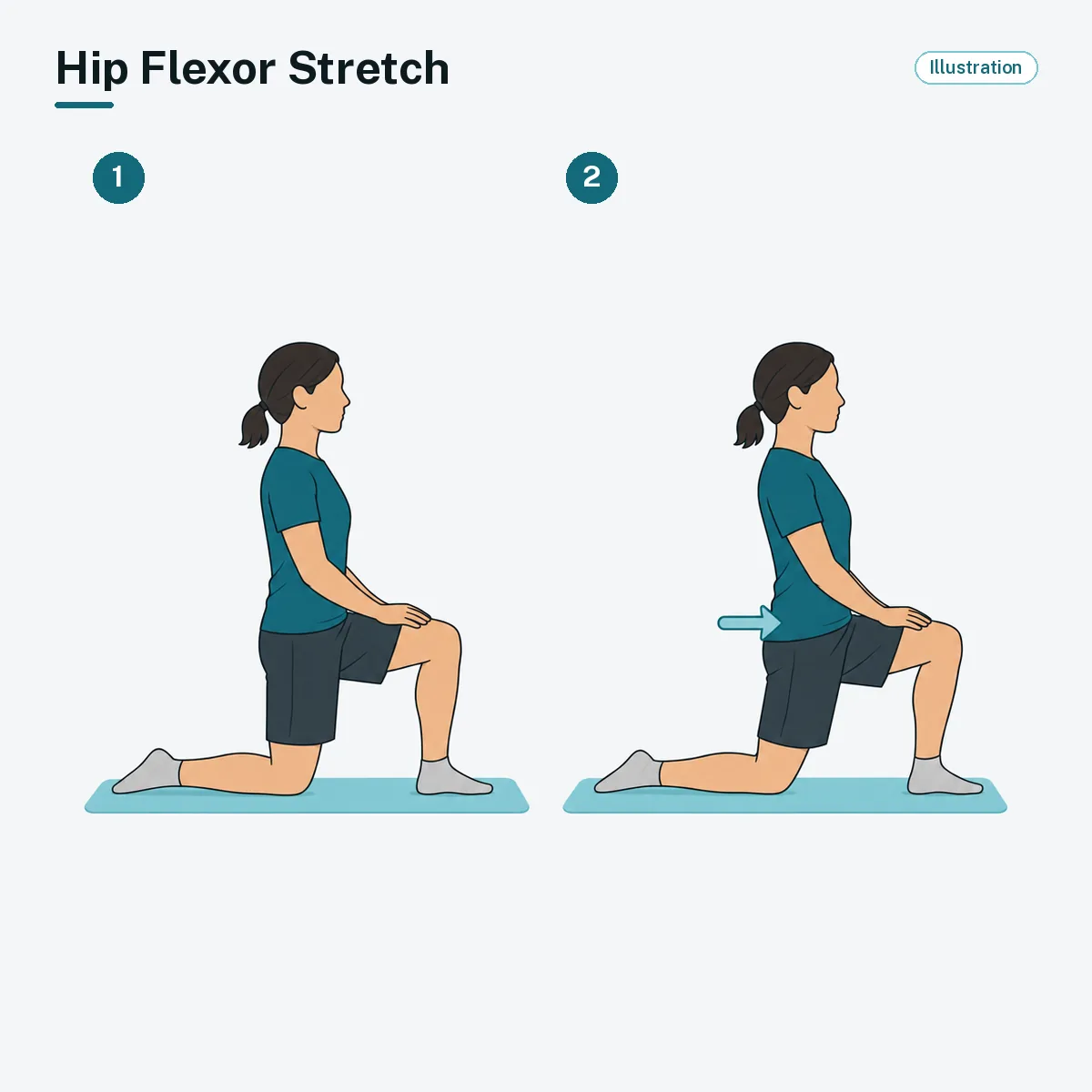 Hip flexor stretch: Kneel on one knee and shift forward gently. Hold 30 seconds. Repeat 3 times per side.
Frequently asked questions
When should I see a doctor for hip pain?
Many people see a physician for pain on the outer hip that may spread down the side of the thigh, pain when lying on that side, or pain with stairs, standing up, or walking long distances. Hip pain can also come from the joint itself or from the low back, so a careful exam matters. Your physician can check hip motion, strength, tenderness, and your low back.
Do I need an X-ray or ultrasound for hip bursitis?
Your physician can help decide what imaging, if any, is right for you. In-office ultrasound can show the bursa and gluteal tendons during your visit. X-rays may be ordered to check for hip arthritis.
How is hip bursitis treated without surgery?
This condition often responds well to targeted, non-surgical care. Options may include physical therapy with gluteal strengthening, activity changes such as avoiding crossing your legs and sleeping with a pillow between your knees, and medications such as anti-inflammatories and topical treatments. Ultrasound-guided injections, PRP injections, and a shockwave therapy referral may also be considered. Your physician can help choose what fits you.
Can an injection help me do physical therapy for hip pain?
When pain makes it hard to progress with physical therapy or home exercise, an image-guided injection may calm inflammation and reduce pain so you can take part more fully. Ultrasound-guided corticosteroid injections target the bursa, and PRP injections may help when gluteal tendons are damaged or pain keeps returning. The goal is to help your exercise program work better, not to replace it, and your physician can help decide.
Sources
- Platelet-rich therapies for musculoskeletal soft tissue injuries. Cochrane Database of Systematic Reviews, 2014.
- Management of Osteoarthritis of the Hip: Evidence-Based Clinical Practice Guideline. American Academy of Orthopaedic Surgeons (AAOS), 2023.
Last updated: October 2026
