
Hand and Wrist Pain (Carpal Tunnel, Arthritis, and Trigger Finger)
Hand and wrist pain can make simple tasks like typing, opening jars, or buttoning a shirt difficult. Carpal tunnel syndrome, thumb arthritis, and trigger finger are among the most common causes. Each often responds well to targeted, non-surgical care.
Reviewed by Samuel Rosenberg, DO, FAAPMR
- Hand and wrist pain can make simple tasks like typing, opening jars, or buttoning a shirt difficult.
- Common symptoms: numbness or tingling in the thumb, index, and middle fingers, often at night; weak grip or dropping objects; pain at the base of the thumb with pinching or twisting; A finger that clicks, catches, or locks in a bent position.
- Treatment options: Splinting, activity and ergonomic changes, medications, hand therapy, ultrasound-guided injections, hydrodissection, surgical referral.
- Each often responds well to targeted, non-surgical care.
Understanding hand and wrist pain
- Carpal tunnel syndrome: The median nerve is compressed as it passes through a narrow tunnel in the wrist.
- Thumb (CMC) arthritis: Cartilage wears down at the base of the thumb, causing pain with pinching and gripping.
- Trigger finger: A tendon in the finger becomes inflamed and catches as it glides.
- De Quervain’s tenosynovitis: Irritation of tendons on the thumb side of the wrist.
Common symptoms
- Numbness or tingling in the thumb, index, and middle fingers, often at night
- Weak grip or dropping objects
- Pain at the base of the thumb with pinching or twisting
- A finger that clicks, catches, or locks in a bent position
- Pain on the thumb side of the wrist
- Stiffness or swelling in the finger joints
Treatment options
- Splinting: Wrist or thumb splints, especially at night.
- Activity and ergonomic changes: Adjusting keyboard position, grip, and repetitive tasks.
- Medications: Anti-inflammatories and topical treatments.
- Hand therapy: Exercises to improve motion and strength.
- Ultrasound-guided injections: Precise injections for carpal tunnel, trigger finger, thumb arthritis, and De Quervain’s.
- Hydrodissection: An ultrasound-guided technique that aims to free a compressed nerve.
- Surgical referral: For severe or persistent nerve compression.
Injections to support your therapy: When pain makes it hard to progress with physical therapy or home exercise, an image-guided injection may calm inflammation and reduce pain so you can participate more fully. The goal is to help your exercise program work better, not to replace it. Learn more about therapeutic injections.
What to expect at your visit
Your physician will ask about your symptoms, work, and hobbies. The exam checks sensation, strength, joint motion, and special tests for nerve compression and tendon problems. EMG and nerve conduction studies can confirm carpal tunnel syndrome and rule out a pinched nerve in the neck. In-office ultrasound often identifies the problem during the same visit.
Home exercises
Move gently. Avoid forceful gripping during flares.
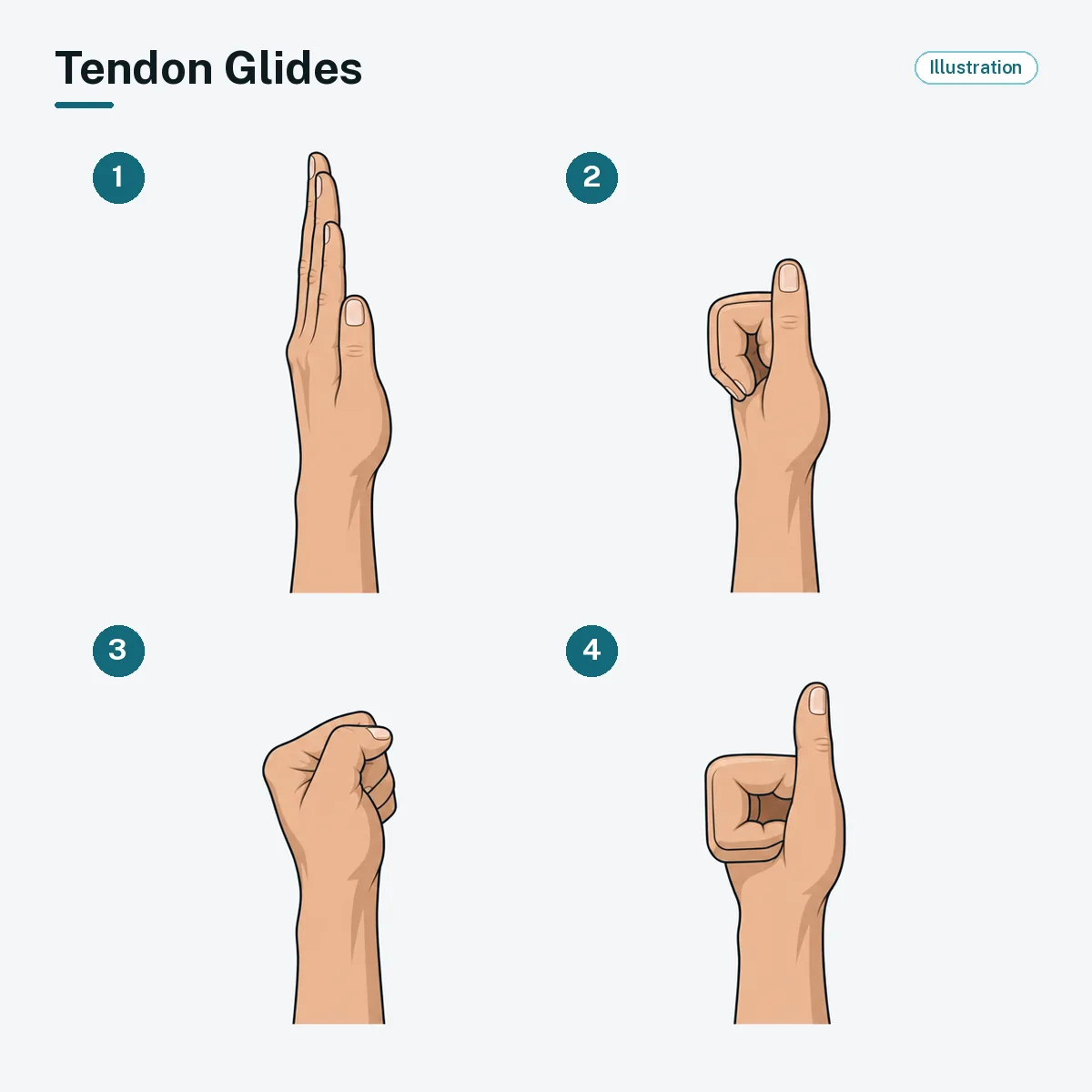 Tendon glides: Move your fingers through a straight hand, hook fist, full fist, and flat fist. Repeat 10 times.
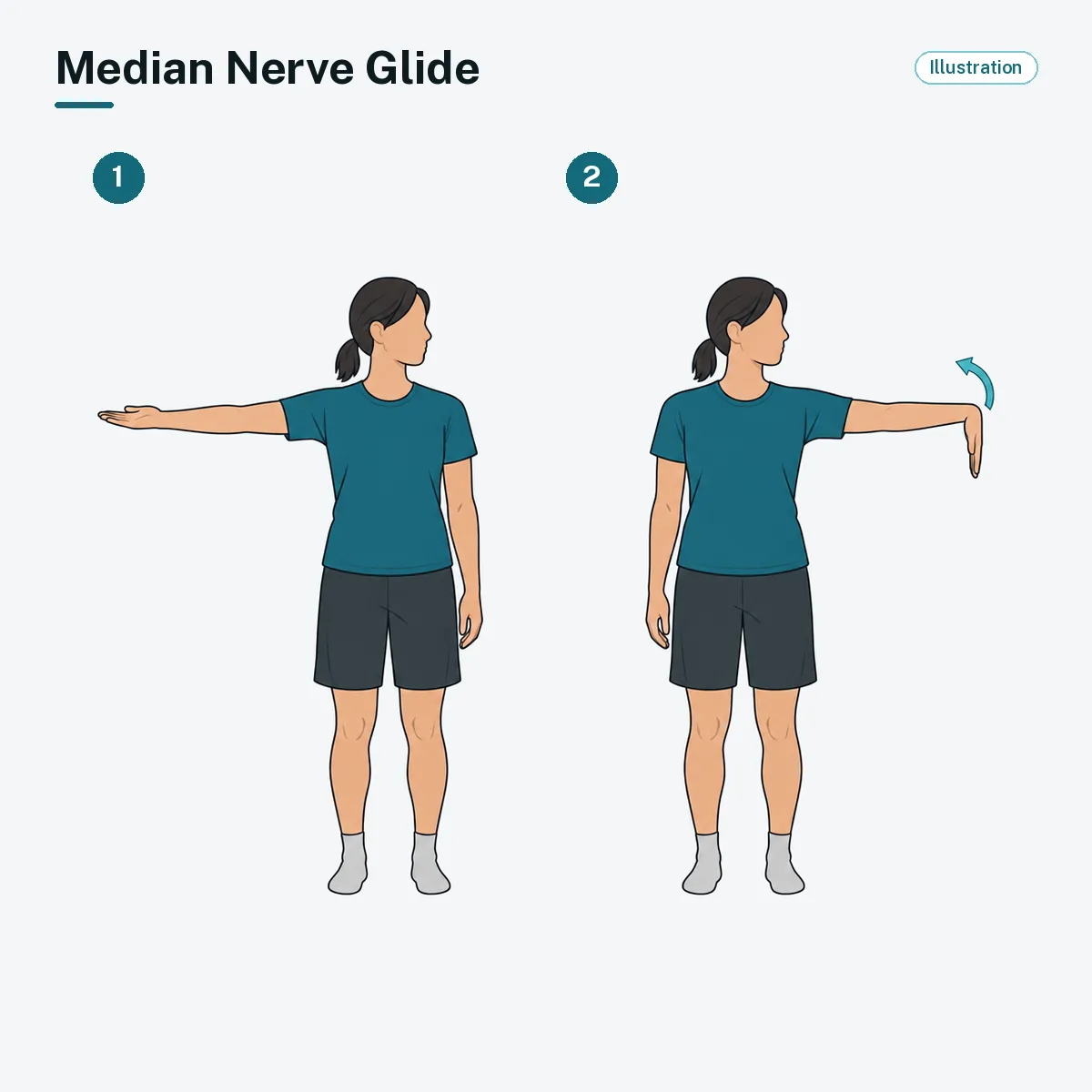 Median nerve glide: With your palm facing up, gently extend your wrist and fingers. Repeat 10 times slowly.
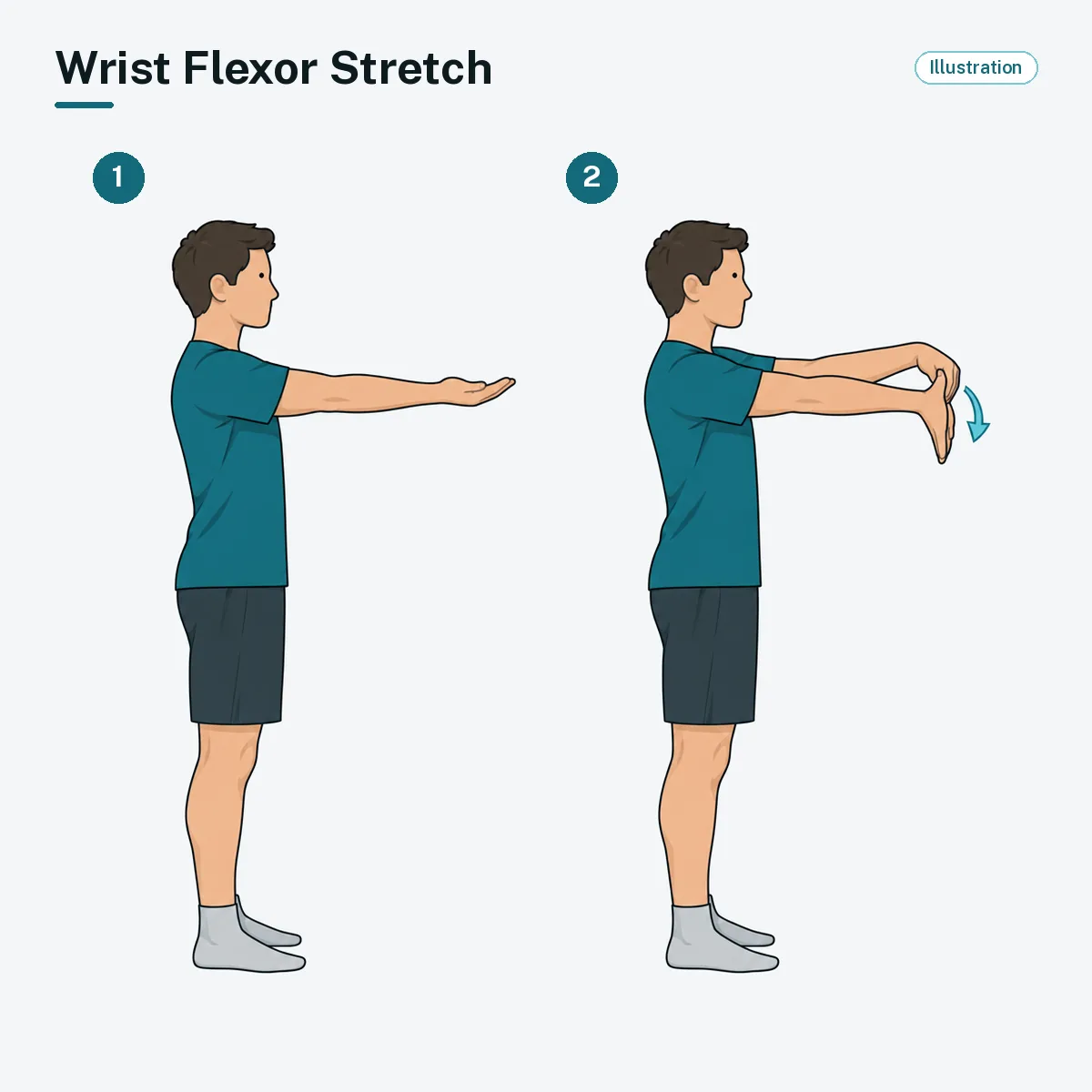 Wrist flexor stretch: Extend your arm and gently pull your fingers back. Hold 20–30 seconds. Repeat 3 times.
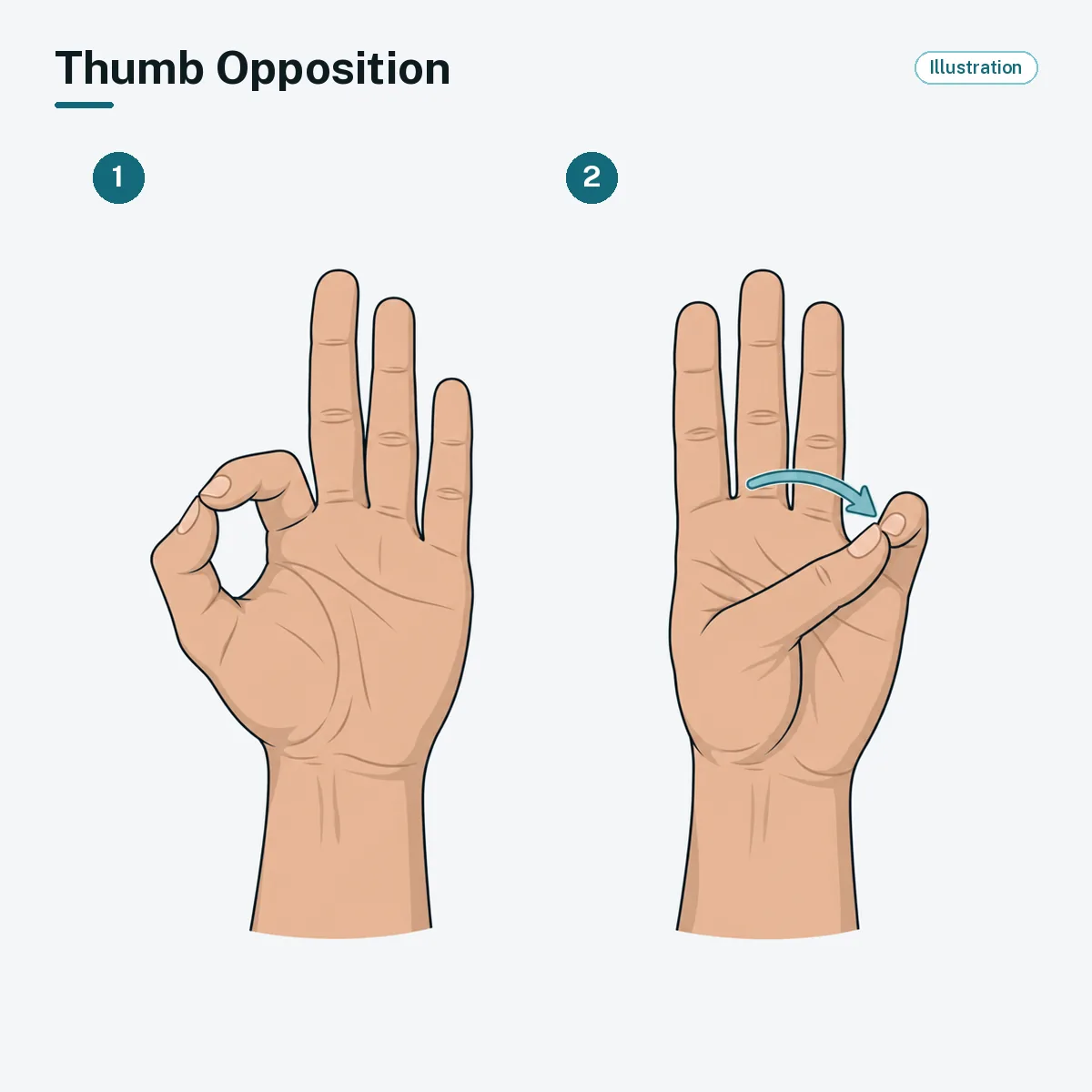 Thumb opposition: Touch your thumb to the tip of each finger. Repeat 10 times.
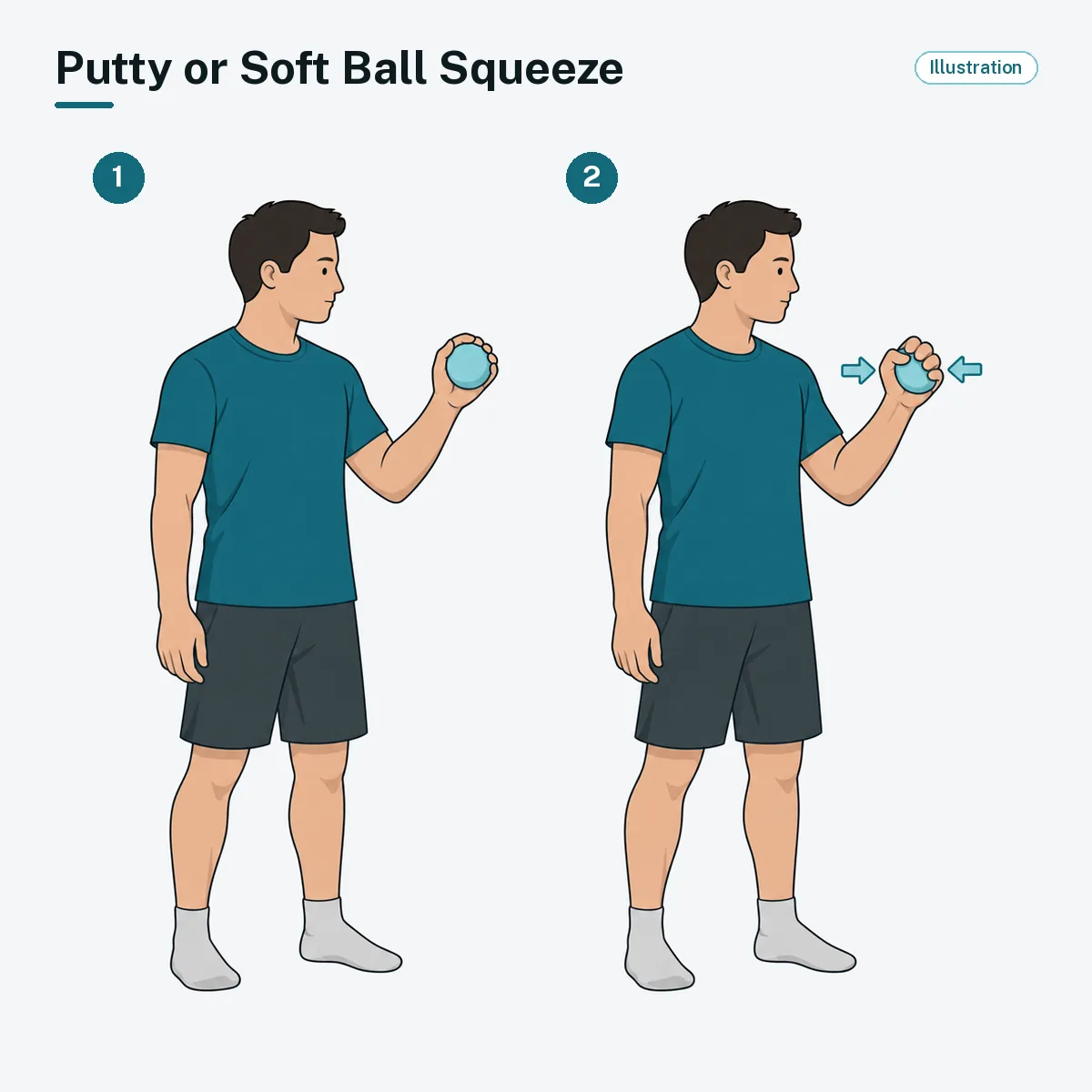 Putty or soft ball squeeze: Gently squeeze for 5 seconds. Repeat 10 times.
Frequently asked questions
When should I see a doctor for hand and wrist pain?
Hand and wrist pain that makes tasks like typing, opening jars, or buttoning a shirt difficult may be worth discussing with your physician. Numbness or tingling in the thumb, index, and middle fingers, often at night, weak grip or dropping objects, or a finger that clicks, catches, or locks are also worth checking. Your physician can examine sensation, strength, and joint motion.
What tests are done for carpal tunnel or hand and wrist pain?
Your physician may begin with an exam that checks sensation, strength, joint motion, and special tests for nerve compression and tendon problems. EMG and nerve conduction studies can confirm carpal tunnel syndrome and rule out a pinched nerve in the neck. In-office ultrasound often identifies the problem during the same visit, and your physician can help decide which tests you need.
What are the non-surgical treatments for hand and wrist pain?
Carpal tunnel syndrome, thumb arthritis, and trigger finger often respond well to targeted, non-surgical care. Options can include wrist or thumb splints, especially at night, activity and ergonomic changes, anti-inflammatory or topical medications, and hand therapy. Ultrasound-guided injections and hydrodissection may also be used, and surgical referral may be considered for severe or persistent nerve compression. Your physician can help choose an approach.
Can an injection help me do hand therapy?
When pain makes it hard to progress with physical therapy or home exercise, an image-guided injection may calm inflammation and reduce pain so you can take part more fully. Ultrasound-guided injections can be used for carpal tunnel, trigger finger, thumb arthritis, and De Quervain's. The goal is to help your exercise program work better, not to replace it. Your physician can discuss whether this fits you.
Last updated: October 2026
